AI-Designed CRISPR: Smarter Guides, Fewer Off-Targets
Machine learning now predicts guide-RNA efficiency, ranks off-targets, and even designs whole new editors. A look at the tools that actually work.

The hard part of CRISPR was never cutting DNA. It was cutting the right DNA and nothing else. Pick a guide RNA that edits your target efficiently, and confirm it does not also chew up a dozen near-matching sites scattered across the genome. For years that meant designing a batch of guides, testing them in cells, sequencing the damage, and iterating. Slow, expensive, and biased toward whatever the lab happened to try.
Machine learning has reshaped that loop. Not by replacing the wet lab, but by ranking candidates well enough that you test the right ten instead of the wrong hundred. The tooling is now specific and good, and a few results deserve attention from anyone running an AI implementation in this space.
The two predictions that matter#
Every guide-design model answers two questions. How well will this guide edit its intended target — on-target efficiency. And where else might it cut — off-target risk. They are different problems with different data, and the best tools handle them separately before combining them.
DeepCRISPR was the model that unified both in one deep-learning framework, predicting on-target knockout efficacy and a whole-genome off-target profile together. It reported close to a twofold improvement in Spearman correlation over the rule-based sgRNA designers that preceded it. The lesson that stuck was not the specific architecture — it was that learned sequence representations beat hand-tuned scoring rules, because the determinants of editing efficiency are subtler than any rule set captures.
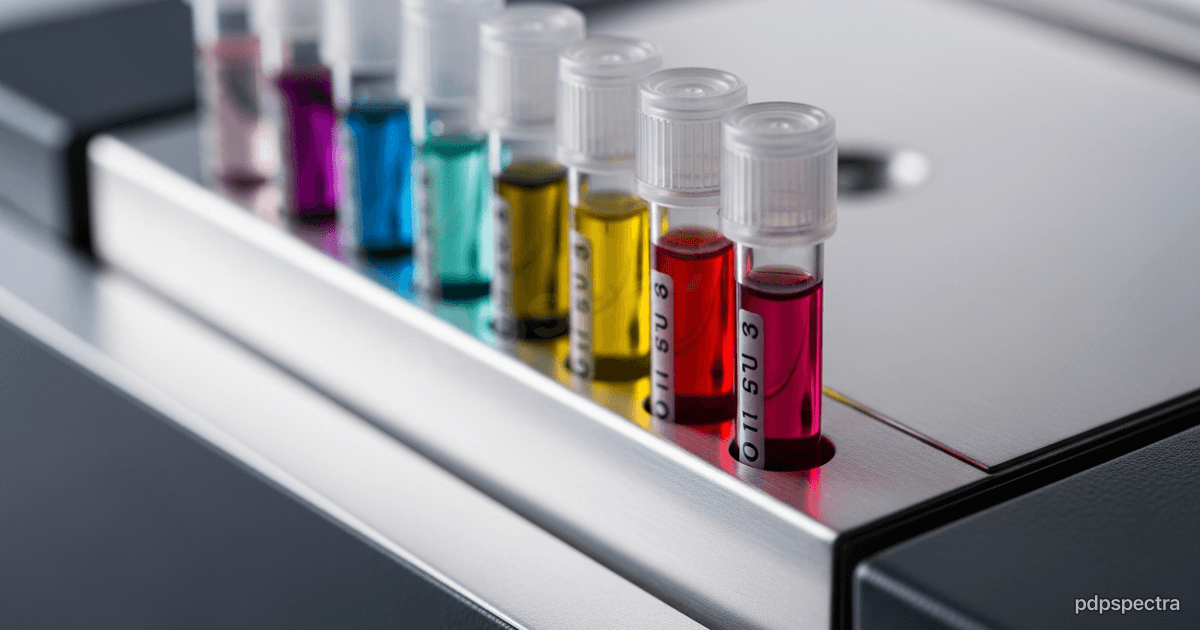
The off-target side is where the modeling gets genuinely hard. A guide does not only cut perfect matches; it tolerates mismatches, and worse, it tolerates small insertions and deletions — a bulge in the guide–DNA pairing. Most early off-target predictors only scored mismatches and ignored indels entirely, which means they missed a real class of unintended cuts. Newer architectures like Crispr-SGRU, a stacked bidirectional GRU, were built specifically to handle mismatches and indels together. That is the right direction: model the failure modes the assay actually produces, not the convenient subset.
Uncertainty is a feature, not a footnote#
A point estimate of off-target risk is close to useless for a clinical decision. What you need is calibrated uncertainty — how confident is the model that this site is safe? Recent work on quantifying uncertainty in off-target activity treats this directly, producing confidence bounds rather than a single number. For any therapeutic program this is the difference between a usable safety prediction and a liability. If your model cannot say “I don’t know,” it should not be in the decision path.
Base and prime editing raise the stakes#
Plain CRISPR cuts and lets the cell repair, which is blunt. Base editing and prime editing rewrite sequence more precisely, and they brought their own design problem: the guide is more complex, so efficiency is harder to predict.
For prime editing, PRIDICT predicts the efficiency of prime editing guide RNAs, reaching Spearman correlations around 0.85 for intended edits and 0.78 for unintended ones. The practical effect is large: guides the model scored high versus low showed many-fold differences in measured editing efficiency across cell types and in vivo. The 2024 successor, PRIDICT2.0, is an ensemble of attention-based bidirectional recurrent networks that handles larger edits — up to 40 base pairs — across replacements, insertions, and deletions, and even suggests silent bystander edits that can push efficiency higher. A companion model accounts for chromatin context, because the same guide behaves differently depending on how accessible the target locus is.
Base editors have an analogous toolset. Deep-learning models such as ABEdeepoff and CBEdeepoff predict base-editor off-target sites, reporting Spearman correlations in the range of roughly 0.71 to 0.86 against measured off-target activity at endogenous loci. The recurring theme across all of these: the wins come from training on large sets of empirically measured outcomes, then learning the messy sequence-context dependencies that no human-written heuristic encodes.
The bigger move: designing the editor itself#
Predicting which guide works is optimization within a fixed toolkit. The more interesting development is using AI to design the editing protein from scratch.
OpenCRISPR-1 from Profluent is the clearest example. The team trained protein language models on a database of more than five million Cas9-like proteins, then generated entirely novel editors that do not exist in nature. OpenCRISPR-1 carries on the order of 400 mutations relative to the standard SpCas9 — a degree of divergence you would never reach by rational, one-mutation-at-a-time engineering — and in their reported assays it edited the human genome with comparable on-target efficiency and improved specificity over SpCas9, plus lower predicted immunogenicity. They released it openly, which matters: it lets others reproduce and stress-test the claims rather than take them on faith.
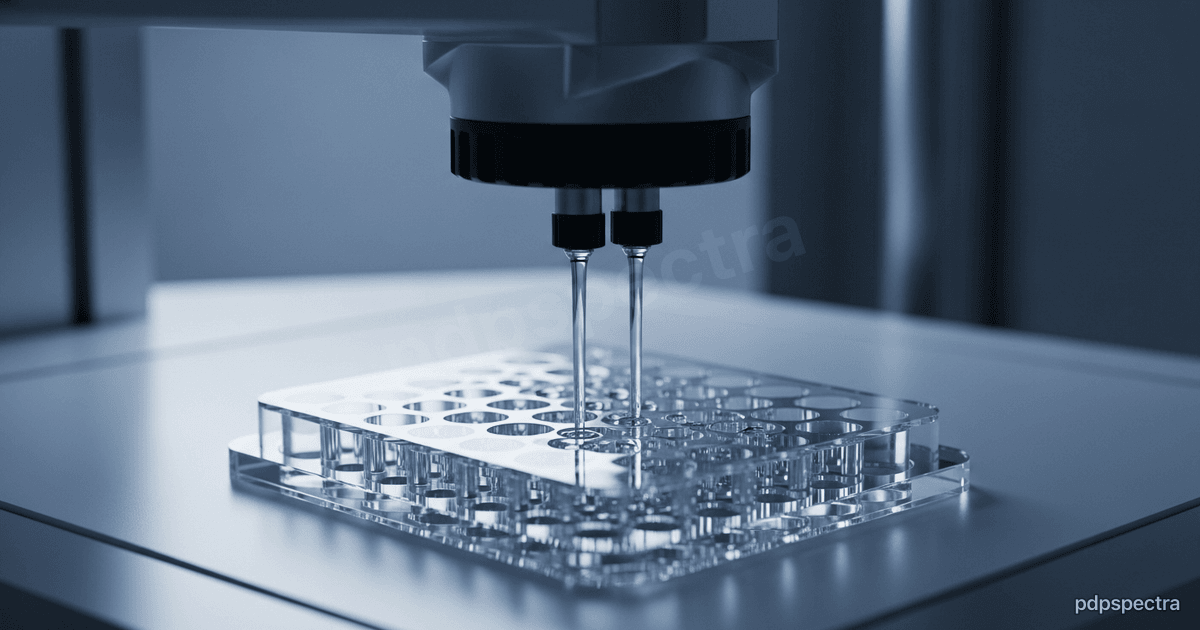
This is the same generative recipe that produced novel proteins elsewhere, pointed at gene editing. Learn the distribution of functional Cas-family proteins, sample from it, and validate the candidates in the lab. The design space a model can search dwarfs what directed evolution covers, and the proteins it proposes are often far from any natural sequence while still folding and functioning.
The practical motivations behind this are concrete, not academic. A novel editor that diverges from SpCas9 by hundreds of residues can sidestep pre-existing immunity — a real obstacle for human therapy, since many people carry antibodies to the bacterial Cas9 proteins in clinical use. It can also open up new PAM requirements, expanding the set of genomic sites you can target at all, and shrink the protein enough to ease delivery, which is frequently the binding constraint in vivo. None of that is guaranteed from a generated sequence; every property has to be measured. But it reframes the editor as something you design toward a spec — immunogenicity, size, specificity, targeting range — rather than something you inherit from whatever bacterium happened to evolve it.
The data problem nobody escapes#
Every model here is only as good as the assays it learned from, and CRISPR assays are noisy in ways that matter. On-target efficiency is measured differently across labs — different cell lines, delivery methods, readout timing — and those choices shift the numbers enough that a model trained on one lab’s data can mislead on another’s. Off-target measurement is worse, because the ground truth is itself a moving target: genome-wide off-target assays disagree with each other, and a site one method flags, another misses. When you train a model to predict “off-target activity,” you are really training it to predict a particular assay’s output, with all that assay’s blind spots baked in.
This makes benchmarking treacherous in the same way it is for any genomic model. If your test guides share targets or sequence context with your training guides, the reported correlation measures memorization, not generalization. Published Spearman numbers are useful as rough signal, not as a leaderboard — they are rarely measured on comparable splits, and small differences between tools are mostly noise. The honest way to compare two guide-design models is to run both prospectively on your own targets in your own system and sequence the results. Anything else is borrowing someone else’s distribution and hoping it matches yours.
There is also a delivery reality that sits underneath all of it. A guide that scores beautifully in a plasmid transfection in HEK293T cells may behave differently delivered as a ribonucleoprotein into a primary cell, or in vivo where chromatin state, expression timing, and cell type all shift. The chromatin-aware prime-editing models exist precisely because that context is not a second-order effect. Treat every score as conditioned on a delivery context, and re-validate when that context changes.
What to take into a real program#
A few principles hold up across all of this.
Rank, then test. Every model here is a triage layer. It tells you which guides, edits, or protein variants are worth wet-lab time. The validation experiment is not optional, and the smallest number that should ever drive a clinical decision is one you measured, not one you predicted.
Watch the distribution. These models are accurate near their training data and degrade away from it. A guide-efficiency model trained mostly in one cell type will mislead you in another; a chromatin-aware model exists precisely because that context shift is real. Know where your target sits relative to the training set.
Demand calibration on the safety side. On-target efficiency being wrong costs you an experiment. Off-target risk being wrong costs you a patient. Hold the off-target model to a higher bar, insist on calibrated uncertainty, and treat any site the model is unsure about as a site to sequence, not to skip.
The discipline is the same one we bring to any Data Platforms or Operational Automation build: version the model and the training data, log every prediction, and keep a measurement loop closing behind every score. The biology is exotic. The engineering rigor is not.
Standing up an ML-driven gene-editing pipeline and need the validation loop built right? Talk to our team.