AI in Legal Contract Review 2026: Harvey, Spellbook, and the Post-Sanctions BigLaw Reality
Production contract review AI in 2026 — Harvey, Spellbook, Ironclad's Jurist, LinkSquares, Robin AI, Lawgeex — and what BigLaw learned after the Mata v. Avianca and Mishcon-class hallucination cases.

Legal contract review was one of the obvious early targets for generative AI, and 2024 and 2025 saw both the most ambitious deployments and the most public failures. By 2026 the BigLaw and in-house counsel adoption pattern has settled into a shape that is more grounded than the 2023 hype cycle and more capable than the 2022 skeptic position would have predicted.
This is where production contract review AI sits in 2026, which vendors matter, and what the post-Mata v. Avianca and post-sanctions environment actually changed.
The cases that shaped the discipline#
Mata v. Avianca (S.D.N.Y., 2023) is the case that every legal AI deployment now cites in its governance policy. Two New York attorneys filed a brief containing six fabricated case citations generated by ChatGPT. They were sanctioned. The case is the canonical example of the LLM hallucination failure mode and is the reason every responsible legal AI product now ships with citation verification, retrieval-grounded generation, and prominent disclaimers about human review.
Several subsequent cases reinforced the lesson. UK courts have addressed similar incidents involving fabricated citations in 2024 filings. The Mishcon de Reya cybersecurity briefings and several US bar association guidance documents in 2024 and 2025 set out the duties of competence and supervision that bind lawyers using GenAI.
The practical effect on the vendor ecosystem has been a shift from “the AI writes” to “the AI proposes, the lawyer verifies, the audit trail is preserved.” Every credible vendor in 2026 ships with this discipline.
The BigLaw frontier: Harvey#
Harvey is the most visible BigLaw-focused legal AI platform and has been since the OpenAI partnership in 2022. By 2026 Harvey is deployed at A&O Shearman (the post-merger entity that combined Allen and Overy’s pioneering Harvey deployment with Shearman Sterling), PwC’s legal practice, and dozens of other major firms.
Harvey’s product surface has grown well beyond contract review — research, due diligence, draft generation across practice areas — but contract review remains a meaningful component. The differentiation versus generic LLMs is the legal-domain tuning, the retrieval over firm knowledge and authority sources, and the workflow integration with the case and matter management systems firms actually use.
The honest 2026 read on the BigLaw GenAI segment is that adoption is real, the productivity gains on specific workflows are meaningful, and the realized impact on overall firm economics is less than the early predictions suggested. Lawyers still bill hours; the hours redistribute toward higher-value review rather than disappear.
The in-house and SMB segment#
Spellbook built specifically for in-house counsel and small firm transactional lawyers working in Microsoft Word. The product sits as a Word add-in and does clause suggestion, redlining, and policy comparison directly in the document the lawyer is already editing. The friction-reduction matters — adoption rates in this segment are very sensitive to how much new tooling the user has to learn.
Robin AI is the UK-origin contract review platform that has moved upmarket from in-house through to several mid-market law firms. Their product is more of a workspace than a Word add-in and includes contract drafting, review, and a managed-services component.
Lawgeex was the pioneer of “click-to-approve” contract review (NDAs especially) but has been overtaken in mindshare by newer entrants. The fundamental approach — playbook-driven automated review against an organization’s standard positions — is still sound and is what several other vendors execute on.
The CLM-adjacent products#
Ironclad’s Jurist is the AI layer on top of Ironclad’s contract lifecycle management platform. The pitch is that an organization with a real CLM has structured contract data the AI can lean on — clause library, playbook, prior versions — and the AI gets better in proportion to the discipline of the underlying CLM.
LinkSquares sits in similar territory with its own CLM plus AI Finalize, AI Review, and AI Analyze layer.
Icertis (the enterprise CLM market leader) has its own AI layer with similar capabilities.
Evisort (acquired by Workday in 2024) is the other major CLM-adjacent AI platform.
The strategic point in this segment is that AI contract review without a CLM is a productivity tool; AI contract review with a real CLM is a control plane. The contracting organizations that get the most value run the CLM discipline first and the AI is a multiplier on top.
What contract review AI actually does well#
The deployed-and-working use cases in 2026:
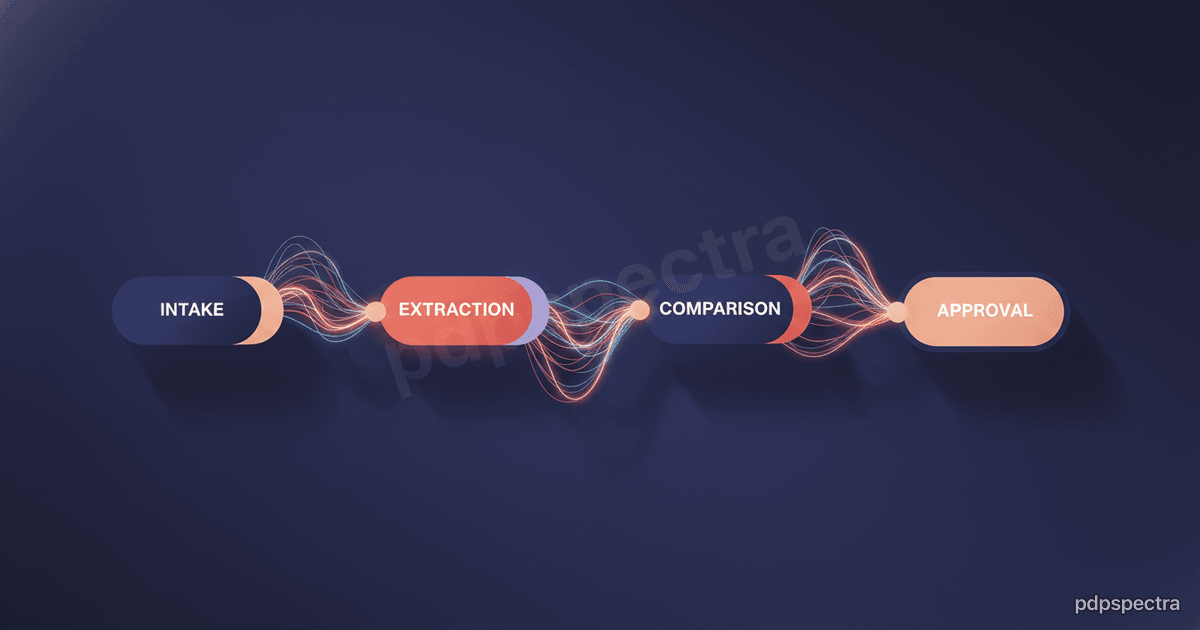
Clause extraction — identifying termination, indemnity, IP assignment, governing law, and several dozen other standard clauses from heterogeneous contracts and structuring them. This is solid, accuracy is high, and the data feeds downstream analytics on portfolio exposure.
Playbook comparison — given an organization’s standard position on each clause, flag where the counterparty’s draft deviates and how much. This is the highest-volume daily use case.
Redline generation — drafting suggested redlines that move the counterparty’s clause toward the organization’s playbook. This works well for routine commercial contracts and less well for bespoke transactional matters.
Summarization — multi-page contract summaries for executive review or for non-lawyers who need the gist. This is genuinely useful and was the first use case to land in production.
Risk identification — surfacing unusual provisions, missing protections, or non-standard language. This works as a first-pass filter.
What contract review AI does not do well#
Heavily negotiated bespoke contracts (M&A, project finance, complex commercial joint ventures) where the value is in the judgement calls and the AI’s confidence is low. Cross-border contracts with multiple governing law layers. Contracts with significant exhibits and side letters whose interpretation depends on the broader deal context. Contracts in a language pair where the model has been trained on insufficient legal-specific corpora.
The honest pattern is that contract review AI is excellent on volume routine work — NDAs, MSAs, SOWs, standard commercial agreements — and is a useful assistant rather than a substitute on bespoke transactional matters.
BigLaw GenAI adoption shape#
The A&O Shearman Harvey deployment is the public benchmark. By 2026 most AmLaw 100 firms have at least pilot deployments of Harvey, Litera’s AI features, Thomson Reuters CoCounsel (formerly Casetext), or LexisNexis Protege. The Magic Circle and US BigLaw firms have moved beyond pilot into broader deployment.
The procurement and governance patterns that have settled out include client consent for AI use on specific matters, model deployment in firm-controlled environments rather than public APIs, training data exclusion guarantees, and bar-compliance documentation for the firm’s general counsel.
The economics question — whether AI productivity gains shrink billing or shift the billing mix to higher-value work — is still being resolved and varies dramatically by firm and practice area.
Where pdpspectra fits#
Our AI integration practice helps in-house legal teams, legal-ops groups, and legaltech platforms build production AI review workflows — extraction pipelines, playbook integration, evaluation harnesses, and the audit trail that bar regulators and clients expect.
Related reading: legal tech stack document AI and CLM, AI legal services 2026, and the AI impact on legal services post.
Contract review AI is real, governed, and disciplined by the cases that came before. Talk to our team about your legal AI roadmap.