Quick Commerce in 2026: Getir's Collapse, Zepto's Rise, and the Dark Store Math
Quick commerce went from 2021 hype to 2023 collapse to 2026 selective viability — Getir wound down, JOKR gone, Gorillas absorbed, GoPuff surviving, Zepto and Blinkit thriving in India. The AI and unit-economics story behind the survivors.

Quick commerce — the 10-to-30-minute grocery and convenience delivery category — is one of the cleanest examples in recent retail history of capital-funded category creation followed by brutal economic correction. Roughly 7-8 billion USD of venture investment flowed into Getir, Gorillas, JOKR, Zapp, Flink, and the long tail of regional players between 2020 and 2022. By 2026 the European and US side of that capital has been substantially destroyed; the Indian side has produced genuinely sustainable operators; and the AI investments distinguishing the survivors are real.
This is the honest sort of who survived, who didn’t, why, and where AI made the difference.
The 2021-2024 collapse, briefly#
Getir — the Turkish-origin operator that became the category’s largest international story — peaked at roughly an 12 billion USD valuation in 2022, raised additional capital through 2023, and announced exits from the UK, Germany, the Netherlands, the US, France, Spain, Italy, and Portugal across the 2024 wind-down. The company retained Turkish operations and a handful of cities in 2025 at a fraction of peak scale. The Gorillas brand — acquired by Getir in 2022 for around 1.2 billion USD — was effectively absorbed and largely wound down in the same exits.
JOKR — the operator backed by a who’s-who of European venture — exited the US in 2022 and wound down most operations through 2023-2024, retaining only its Latin American Daki business and the pivot to grocery wholesale. Zapp — the UK-origin operator — wound down most operations through 2023. Flink — the German-origin operator — restructured and remained in continental Europe through 2024-2025 at a meaningfully reduced footprint.
The capital destruction in the European and US quick-commerce category is now estimated in the 5-to-7 billion USD range. The lesson the category took was that dark-store-only quick commerce — dedicated micro-fulfilment centres delivering 10-30-minute orders — required order density that western consumer behaviour did not produce at sustainable economics outside a small number of city centres.
What broke the dark store math#
The Getir-style dark store model required several conditions simultaneously: high order density per square kilometre (so the rider has multiple drop-offs per route), high basket value (so the per-order revenue covered the per-order cost), tight rider productivity (orders per rider hour), and minimal customer acquisition cost (so the lifetime value paid back the marketing spend). Most western city catchments hit one or two of these but not all four simultaneously, and the capital subsidising the gap ran out in 2022-2023.
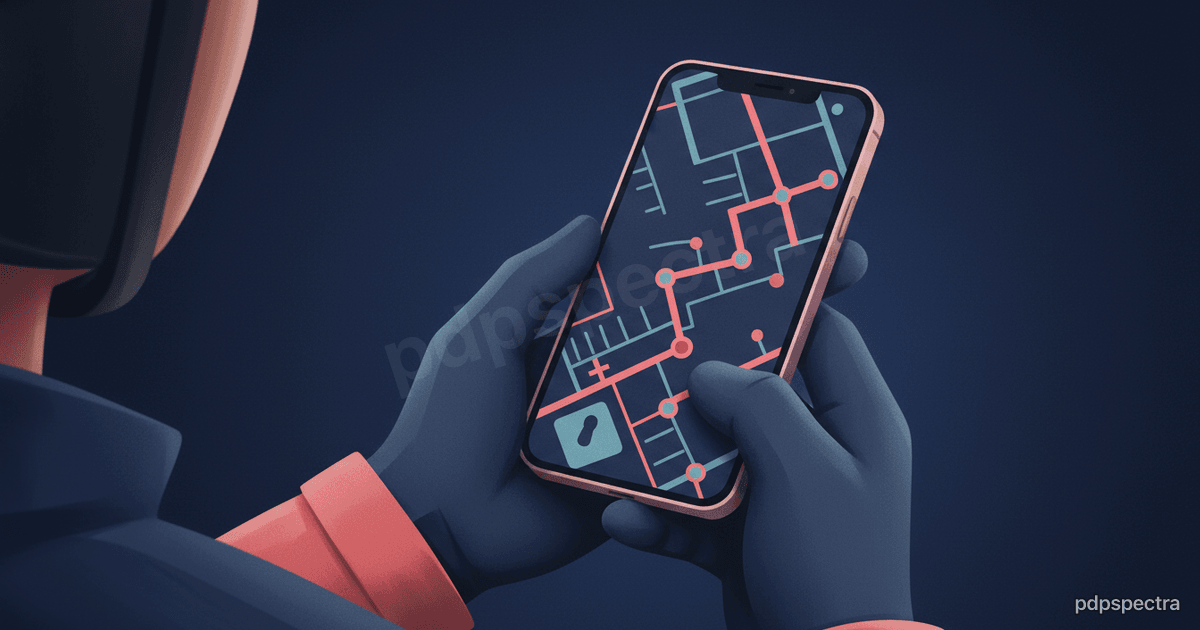
The specific failure modes that recurred: rider utilisation below the breakeven threshold during off-peak hours (afternoon dead zones, weekday mornings), basket sizes meaningfully below the marketing-promised numbers, customer acquisition cost above the lifetime value after the initial discount cohort, and the dark store rent burden in central city locations where the order density was actually highest.
The AI investments — dispatch optimisation, dynamic pricing, demand forecasting — all helped at the margin. None solved the core math when the order density wasn’t there.
GoPuff — the survivor#
GoPuff (Philadelphia-based, founded 2013, valued at 15 billion USD in its 2021 round, restructured 2023, profitable in specific markets through 2025) is the largest US quick-commerce survivor. The operational model — vertically integrated micro-fulfilment with the GoPuff-branded delivery — differs from the Instacart-style marketplace. The 2023-2025 restructuring closed unprofitable cities, refocused on dense East Coast and Texas markets, and significantly cut the central-team overhead.
The AI investments GoPuff actually scaled — basket-composition recommendations to lift average order value, dispatch optimisation to lift rider utilisation, demand forecasting to right-size each dark store’s inventory, and dynamic pricing for delivery fees during peak demand. The honest read in 2026 is that GoPuff is operationally profitable in mature US markets and the company has earned the right to exist after the broader category collapse. The IPO conversation that paused in 2022 may revisit through 2026-2027.
Zepto, Blinkit, and Swiggy Instamart — the Indian story#
The Indian quick commerce market is the category’s clearest success. Zepto (Mumbai-based, founded 2021, IPO filed early 2025, secured the largest private rounds in Indian e-commerce through 2024-2025), Blinkit (acquired by Zomato in 2022, now meaningfully profitable per Zomato’s disclosures), and Swiggy Instamart (Swiggy’s quick-commerce arm, supporting Swiggy’s late-2024 IPO valuation) operate a category whose Indian economics genuinely work.
What made India different: extreme urban density in major metros, low rider labour cost relative to basket value, consumer behaviour that adopted 10-minute delivery as a default for daily grocery (not the western pattern of occasional convenience), and dark store rent that fit the unit economics. The combined effect was order density at levels western catchments could not match, and the AI investments — Zepto’s dispatch platform, Blinkit’s demand forecasting, Swiggy’s cross-vertical optimisation — paid back at scale.
By 2026 the Indian quick-commerce category has approximately tripled in revenue over its 2023 baseline, with the three major operators producing the majority of the volume and a long tail of regional and category-specific players growing alongside. The Indian model is now being studied as a counter-template by operators in Southeast Asia, the Middle East, and parts of Latin America.
Wolt and Bolt Food in Europe#
Wolt (Finnish-origin, acquired by DoorDash in 2022 for around 7 billion EUR) and Bolt Food (the Estonian Bolt’s food arm) operate in the European quick-commerce category as marketplace-and-retailer-hybrid models rather than pure dark-store plays. Wolt’s grocery and convenience expansion through 2024-2025 leveraged the existing rider fleet and the DoorDash data and ML investment behind it. Bolt Food retrenched in several markets through 2024 as part of the broader Bolt restructuring.
For the European market in 2026, the operating reality is that the surviving quick-commerce footprint is dominated by marketplace-style operators (Wolt, DoorDash via Wolt, Uber Eats grocery) plus the retailer-led services (Tesco Whoosh, Carrefour Sprint, Coop Italia operators) rather than the dedicated dark-store category that broke.
Instacart Caper and the in-store quick-commerce play#
Instacart’s strategic positioning during the dark-store collapse — partnering with existing retailer footprints rather than building a dedicated dark-store network — produced a more defensible model. The Caper smart cart and the broader Connected Stores story (covered in the grocery AI post) positioned Instacart as the technology and demand layer on top of the chain’s existing store assets. The 2023-2024 Instacart IPO and subsequent operating discipline reflected this positioning.
The AI investments that distinguished the survivors#
Four AI investments separated the operators that survived from the operators that didn’t.
Dispatch optimisation — matching the right order to the right rider at the right time across a multi-order pipeline, with predictive routing that accounts for cooking time, traffic, and rider location. The mature dispatch models lifted orders-per-rider-hour by a measurable percentage over the 2022-2025 window.
Demand forecasting — store-level, item-level, hour-level forecasting that drove inventory placement decisions and rider scheduling. The operators that ran sophisticated forecasting reduced stockout rate and improved rider utilisation simultaneously; the operators that didn’t saw both metrics drift the wrong way.
Dynamic pricing of delivery fees — the willingness-to-pay model that surfaced higher fees during peak demand and lower fees during off-peak, with the surplus directed at order density rather than margin extraction. Done well, this lifted off-peak utilisation; done poorly, it triggered customer churn.
Basket-lift AI — the recommendation surface that lifted average order value through complementary-item suggestions at the checkout step. The lift looks small per order but compounds against the per-order cost structure.
What we recommend in 2026#
For an operator or retailer evaluating quick commerce:
- Pure dark-store category in western markets — proceed with extreme caution. The unit economics require density most catchments don’t produce; the capital subsidy era is over.
- Existing-store fulfilment for sub-hour delivery — the Tesco Whoosh and Walmart Spark Driver models are the credible western pattern.
- Indian-style dark-store density — works in specific Asian urban geographies; the Indian operators are the reference model.
- Marketplace partnerships — Wolt, DoorDash, Uber Eats are increasingly viable channels for chains that don’t want to build the technology.
- AI as competitive necessity — dispatch, forecasting, dynamic pricing, and basket lift are no longer differentiators in the surviving operators; they are operating requirements.
Related reading#
Where pdpspectra fits#
We help quick-commerce and grocery operators stand up the dispatch, forecasting, and pricing models alongside the data infrastructure to feed them. Our ML and MLOps practice handles the model layer, and the data engineering team handles the operational pipelines.
Quick commerce works where the density works. If you are scoping a dispatch or forecasting program, or evaluating whether to build versus partner, tell us about the catchment.