AR Glasses in 2026: Meta Orion, Ray-Ban Meta, and the Real Mass-Market Bet
Where AR glasses sit in 2026 — Meta Orion, Ray-Ban Meta success, Quest 3S, Samsung Project Moohan with Android XR, Snap Spectacles 5, and the AR vs VR vs MR battle.

If Vision Pro and Quest 3 are the headset present, AR glasses are the form factor everyone in the industry is betting will define the next platform. The difference matters. A headset asks you to enter a different physical posture and accept being visibly off in your own world. Glasses sit on your face the same way prescription frames do, leave the social signal intact, and add information rather than replacing the room. Meta Orion, unveiled at Connect 2024, is the most credible demo any major company has shown that the glasses form factor is genuinely close. Ray-Ban Meta, meanwhile, is the unglamorous product that quietly became the actual breakout success in this whole category.
This post walks through the AR glasses field in 2026 — Orion, Ray-Ban Meta, Quest 3S, Samsung Project Moohan with Google’s Android XR, Snap Spectacles 5 — and the form-factor argument underneath all of them.
Meta Orion, what was actually shown#
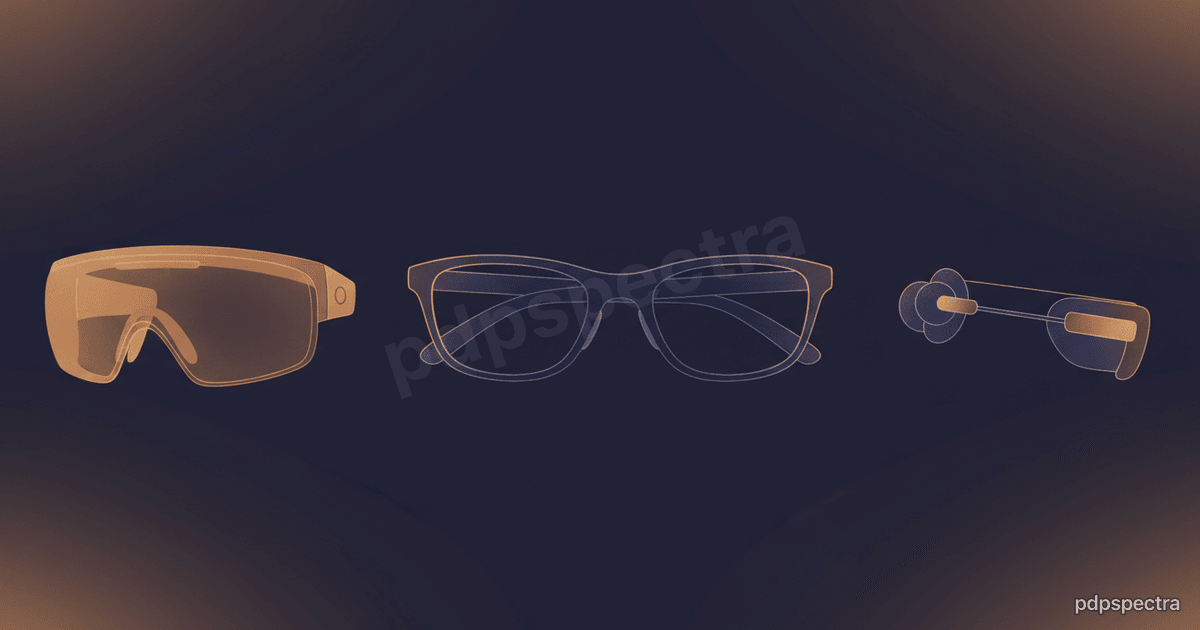
Meta unveiled Orion at Connect in September 2024 as a research prototype, not a product. The specifications were genuinely striking. A 70-degree field of view through silicon-carbide waveguides, a custom Meta silicon compute unit worn in a separate pocket-puck, a wristband with EMG-based gesture sensing, eye-tracking, hand-tracking, and a battery rated for around two hours of mixed use. The form factor is recognisably a pair of thick black-rimmed glasses rather than a headset, weighing under 100 grams.
The honest framing from Meta itself was that Orion was a working prototype with a per-unit cost in the high thousands, and that a productised version would arrive later in the decade — probably late 2027 at the earliest. The 2026 status is that Meta has continued internal iteration, but no consumer Orion has shipped and none is imminent. What Orion proved is that the optical-stack problem — getting genuine see-through AR with a wide field of view into a glasses-sized form factor — has a credible path. What it did not prove is that the manufacturing economics or the application stack will be there on the same timeline.
Ray-Ban Meta, the actual breakout#
Ray-Ban Meta — the second-generation product launched with EssilorLuxottica in late 2023 and refreshed in 2024 and 2025 — is the AR-glasses success story of this generation, even though purists argue it is not really AR. There is no display. The glasses do audio, dual 12-megapixel cameras, an open-mic Meta AI assistant, and live streaming to Instagram and Facebook. By early 2026 cumulative Ray-Ban Meta sales had passed two million units, well clear of any AR or VR device at the same price point.
The lesson Ray-Ban Meta taught the industry is that consumers will pay 300 dollars for a normal-looking pair of glasses with a camera, microphones, and an AI assistant — and that the AI assistant matters more than the visual overlay. Meta’s bet, increasingly, is that the next product is Ray-Ban Meta plus a small monocular heads-up display for notifications and AI responses, not a full Orion-style binocular AR system. That intermediate product, internally codenamed Hypernova in reporting through 2025, is the device most analysts expect Meta to ship to consumers in 2026 or 2027.
Quest 3S and the headset side#
Quest 3S — the cheaper 300-dollar cousin to the Quest 3 — launched in late 2024 and pulled millions of new buyers into the Meta headset ecosystem. It is not glasses, but it is the device that subsidises everything Meta is doing in AR. Reality Labs continues to lose multiple billions per quarter on R&D, and the Quest 3 and 3S volumes are what makes that defensible. The Quest 3S kept the colour pass-through that made Quest 3 a credible MR device, dropped the price, and shipped without the Touch Plus controllers in the base SKU.
The relevance to the glasses conversation is that the Quest ecosystem — the developer base, the Horizon OS surface, the Meta AI integration — is the substrate that Meta’s eventual consumer AR glasses will plug into. Apple has the Vision Pro ecosystem, Google has Android XR, Meta has Quest. The platform fight that matters is happening on the headset side first.
Samsung Project Moohan and Android XR#
Samsung’s Project Moohan headset launched in late 2025 as the flagship Android XR device, built in partnership with Google and Qualcomm. The hardware is recognisably a competitor to Vision Pro at a lower price point, with passthrough mixed reality, eye and hand tracking, and a Snapdragon XR2-plus generation processor. The more important story is the software layer underneath. Android XR is Google’s third serious attempt at an XR operating system, and it is the first one with a credible AI assistant story baked in — Gemini handles the multimodal interaction, and the developer story builds on the Android app catalogue with XR-specific APIs layered on top.
Samsung is also reportedly building AR glasses in the Ray-Ban Meta mould, with Google’s assistant rather than Meta’s. Those have not shipped at the time of writing, but they would arrive into a Android XR ecosystem that, by 2026, has begun to find product-market fit at the developer level.
Snap Spectacles 5 and the developer track#
Snap’s Spectacles 5 — shipped to developers in late 2024 — are real see-through AR glasses with a much smaller field of view than Orion (around 46 degrees) and an emphasis on the Snap Lens Studio developer community. The Spectacles bet is different from Meta’s or Apple’s. Snap is not trying to win the mass-market platform fight. It is trying to be the developer surface where the AR application library actually gets built, on the theory that whichever company ships consumer AR glasses will need a content catalogue and will partner with whoever has it.
The 2026 Spectacles community is small but interesting — fashion AR, navigation overlays, sports-broadcast experiments, museum and gallery installations. The Spectacles roadmap pointed to a more consumer-friendly fifth-or-sixth-generation product later in the decade, but Snap has been deliberately quiet about timing.

The AR vs VR vs MR battle, in 2026 terms#
The terminology fight is mostly settled now. Pure VR — fully immersive, blocking the real world — is a gaming-and-training category with stable but not exploding demand. Mixed reality (MR) — full headsets with high-quality passthrough — is where Vision Pro, Quest 3, and Project Moohan all live, and it is where the high-end enterprise use cases sit. AR — see-through glasses with overlays — is the category everyone agrees is the eventual mass market, but no one has a shipping consumer product that does it well at a tolerable price.
The bet most of the major players are now making is that the path to mass-market AR runs through audio-and-camera glasses (Ray-Ban Meta, future Samsung equivalents) plus single-display HUD glasses (Hypernova, possibly a future Apple product), with full binocular wide-field AR (Orion-class) arriving in 2028 or later as a premium tier above that.
What this means for buyers and builders#
If you are an enterprise builder looking at AR in 2026, the answer is the boring one. Use Quest 3 or Vision Pro for high-fidelity 3D and training, use Ray-Ban Meta or Snap Spectacles for hands-free workflow assistance and field-service overlays, and do not plan a roadmap around Orion-class glasses being available before 2028.
Where pdpspectra fits#
Our AI and LLM integration practice helps enterprise teams pick the right XR form factor for the workflow and integrate the AI-assistant layer that makes any of these devices useful in the field.
Related reading: the Apple Vision Pro evolution post, the multimodal AI 2026 post, and the edge AI deployment patterns post.
The form-factor fight is far from settled, but the AI assistant inside the glasses is winning regardless of the display. Talk to our team about your XR pilot.