Model Serving Frameworks in 2026: vLLM, SGLang, TensorRT-LLM, TGI, and the Rest
Honest tradeoffs between the model serving frameworks that actually ship in 2026 — vLLM, SGLang, TensorRT-LLM, TGI, Ollama, Ray Serve, BentoML, KServe.

Model serving is the layer most teams underinvest in until production hurts. In 2026 the framework choice is no longer about which one technically works — they all do — but about operational maturity, throughput at your real workload shape, and how easy the team can keep the stack patched as models and CUDA versions move underneath. We have shipped self-hosted inference on vLLM, SGLang, TensorRT-LLM, TGI, Ray Serve, BentoML, and KServe across hospital, banking, and SaaS deployments. Here is the honest map.
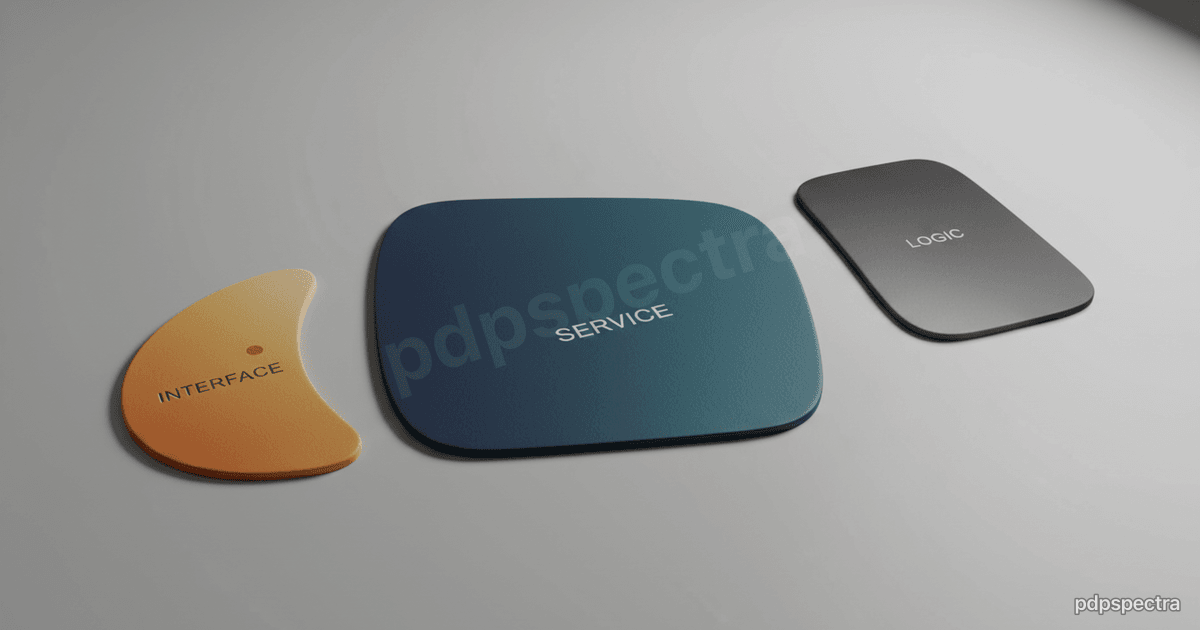
The two layers that get conflated#
People conflate two layers that are doing different jobs.
The engine layer turns model weights into a high-throughput token machine: paged attention, continuous batching, prefix caching, FP8 or INT8 quantization, speculative decoding. vLLM, SGLang, TensorRT-LLM, and TGI live here.
The platform layer handles deployment, scaling, routing, retries, monitoring, multi-model serving, and the rest of the operational surface. KServe, Ray Serve, BentoML, Triton’s model orchestration layer, and SageMaker’s serving infrastructure live here. They wrap engines.
Most production deployments need both. Most framework comparisons mix them up.
vLLM: the safe default in 2026#
vLLM remains the default we reach for. The reasons are practical.
The engine is genuinely fast. PagedAttention’s memory efficiency, continuous batching, and the prefix caching that landed in 0.5 and matured through 0.7 give it strong throughput across model families. Llama 3.3 70B FP8 on 2x H100 SXM5 at concurrency 32 sits around 90 to 140 tokens per second per user, 2,800 to 3,800 aggregate, which is where the 2026 baseline lives.
The community moves fast. New model architectures usually have vLLM support within days of release. The 0.6 and 0.7 lines added Llama 4, DeepSeek V3, and Qwen 3 support quickly. Blackwell B100 and B200 support shipped on a reasonable timeline.
The operational surface is approachable. The OpenAI-compatible API server is a single binary plus config. Kubernetes deployment via a vanilla Deployment + Service is fine. Helm charts and the official KServe runtime ship as well. The “operating vLLM” learning curve is not nothing, but it is far gentler than TensorRT-LLM.
Where vLLM disappoints: when you push the edges. Heavy structured-output workloads see SGLang pull ahead. Multi-LoRA serving at scale is workable but not as polished as some specialized stacks. AMD MI300X support has improved but still trails NVIDIA.
SGLang: the structured-output and agent workhorse#
SGLang’s RadixAttention and its first-class structured-generation support make it the right call for two workloads vLLM handles less well: JSON-shaped tool-calling outputs and dense agentic workflows with overlapping prefix structure.
The numbers: SGLang on Llama 3.3 70B for JSON-shaped output frequently lands 20 to 40 percent higher aggregate throughput than vLLM at the same concurrency, because the constrained-decoding path is more efficient. For chain-of-thought reasoning agents where prefixes overlap heavily, the RadixAttention cache hit rate dramatically reduces wasted prompt-processing.
Where SGLang is the right pick: tool-using agents with high JSON-output volume, RAG pipelines where retrieved-context prefixes overlap across requests, structured-extraction workloads.
Where it disappoints: smaller community than vLLM, slightly later support for the newest model architectures, fewer ready-made Kubernetes integrations.
TensorRT-LLM: when the last 30 percent matters#
TensorRT-LLM is NVIDIA’s optimized serving stack. It is genuinely the fastest path to peak throughput on NVIDIA hardware for supported models. The catch is operational complexity. Building and deploying a TensorRT-LLM engine requires per-model compilation, careful versioning across CUDA, TensorRT, and driver releases, and a real understanding of the engine’s tuning knobs.
The numbers can be impressive. Llama 3.3 70B on 2x H100 with a well-tuned TensorRT-LLM build will routinely beat vLLM by 30 to 60 percent in aggregate throughput. On B200 the gap widens further on workloads where the engine is mature.
Where TensorRT-LLM is the right pick: production deployments serving tens of millions of tokens per day at a large enterprise where the engineering investment to operate it pays back through GPU savings. NVIDIA-only fleets.
Where it disappoints: small deployments. The operational cost of running TensorRT-LLM exceeds the GPU savings for anything below roughly 5M to 10M tokens per day per model. Cross-hardware portability is poor.
TGI: solid, Hugging Face-integrated#
Hugging Face’s Text Generation Inference (TGI) was the leading OSS serving stack in 2023 and has been kept current. Throughput trails vLLM modestly on most workloads in 2026; the integration with the Hugging Face ecosystem is the strongest of any framework. If your model lifecycle lives in HF Hub, your training is on HF Accelerate, and your serving is also on HF infrastructure, TGI is the friction-free choice.
Where TGI disappoints: head-to-head throughput at the cutting edge versus vLLM and SGLang.
Ollama: the local and edge default#
Ollama remains the de facto local-development and edge-deployment stack. It is not a production serving framework for high-throughput multi-tenant workloads, and it does not pretend to be. It is the right choice for developer laptops, single-user demos, and small on-device deployments where its model packaging story shines.
Where it disappoints if you try to push it: multi-tenant production. It is not architected for the concurrency and throughput patterns vLLM and SGLang target.
Ray Serve, BentoML, KServe: the platform layer#
These wrap engines. The choice depends on the rest of your stack.
KServe is the right pick if you are already on Kubernetes and want a Kubernetes-native deployment model. Its InferenceService CRD, the integration with vLLM and TGI runtimes, the auto-scaling via Knative or HPA, and the canary-deploy story are all production-ready. We use KServe by default for clients with existing platform-engineering capacity on Kubernetes.
Ray Serve is the right pick for multi-model serving graphs, real composition (text-to-speech that calls a vision model that calls an LLM), and shops already running Ray for distributed training. It is also a strong fit for online RAG pipelines where the embedding model, vector lookup, and LLM live in the same serving graph.
BentoML is the right pick when the team wants a more developer-friendly serving framework with clean Python-first packaging, easy local-to-cloud workflow, and less Kubernetes overhead. Strong for smaller teams. The hosted BentoCloud offering closes a real operational gap.
Triton Inference Server still has a place for serving heterogeneous model types in the same fleet (LLM + computer vision + classical ML). For pure LLM workloads, vLLM and SGLang have largely displaced it.
The speculative decoding rollout#
Speculative decoding went from research demo to production-default through 2025. vLLM 0.6 added robust support; SGLang and TensorRT-LLM have had it for longer. The pattern: pair a small draft model (Llama 3.2 1B, Llama 3.2 3B) with the target large model. The draft proposes a batch of tokens; the target verifies and accepts what matches its own distribution.
The uplift on suitable workloads is typically 1.5x to 2.5x aggregate throughput at no quality cost. On code-generation workloads where the draft is well-matched to the target the uplift can reach 3x. On highly variable workloads (creative writing, very long-form generation) the gain compresses.
In our 2026 deployments, speculative decoding is on by default for any Llama 70B or Llama 4 70B-class serving cluster. The throughput math no longer justifies leaving it off.

What we deploy by default#
For client engagements in the last twelve months:
- vLLM as the engine for any general-purpose serving cluster, with speculative decoding enabled.
- SGLang when the workload is dominated by structured outputs or agent-style chain-of-thought.
- TensorRT-LLM only when throughput requirements justify the engineering investment, typically tens of millions of tokens per day per model.
- KServe on Kubernetes as the platform layer for any client with an existing K8s platform; the InferenceService CRD wrapping vLLM is a clean production shape.
- BentoML for smaller teams without a Kubernetes platform that want a Python-first serving workflow.
- Triton or TGI in niche cases where the rest of the stack favors them.
For broader context on where serving sits in the stack, see our sub-100ms inference with vLLM, Triton, and TGI, the AI gateway pattern, and our open-source LLMs in production piece.
The thing the framework does not solve#
A serving framework gives you tokens at a throughput. It does not give you observability into prompt-level cost drift, model version A/B routing across providers, evals-as-code that block bad deploys, or per-feature attribution. For most production AI, the framework is the easy part; the discipline around it is the hard part.
The teams that quietly ship reliable inference are the ones who treat the framework as a commodity and invest in the operational layer above it.
Where pdpspectra fits#
Our ML and MLOps and AI and LLM integration practices deploy and operate self-hosted inference across the major serving frameworks. We help clients pick the right engine and platform layer for the workload, build the operational discipline around it, and migrate as the landscape moves.
Related reading: Sub-100ms inference, GPU scheduling on Kubernetes, and AI gateway as a single inference API.
The serving framework matters less than the operational discipline around it. Talk to our team about your inference stack.