Operational Automation That Ships: Boring Tools Win
Most Operational Automation fails on trendy frameworks, not load-bearing ones. The case for warehouse-driven automation that runs without you.

Walk into any company with a stalled automation initiative and you will usually find the same wreckage: a half-built workflow engine on a framework someone was excited about eighteen months ago, a graveyard of one-off scripts nobody dares touch, and a team manually doing the work the automation was supposed to do because the automation cannot be trusted. The project did not fail because the problem was hard. It failed because the team optimized for novelty instead of for the thing that actually matters — does it run without us?
Operational Automation has a fashion problem. There is always a newer orchestrator, a slicker low-code platform, a framework promising to make the boring parts disappear. And teams keep reaching for the trendy tool over the load-bearing one. The systems that actually ship and keep running are almost always built on boring, proven infrastructure: a data warehouse, a scheduler, a transformation layer, and a discipline about idempotency and observability that no framework gives you for free.
The warehouse is already the engine#
Here is the reframe that changes how you build. Most companies treat their data warehouse as a place dashboards come from — a reporting destination. That is using a freight engine to power a desk lamp. The warehouse is the best operational engine you already own, and warehouse-driven automation means letting it drive actions, not just display numbers.
The state of the business already lives there: which invoices are unpaid, which appointments are unconfirmed, which students have an outstanding balance, which inventory crossed a reorder threshold. If that state lives in the warehouse, the warehouse is the natural place to decide what should happen next. A query that finds overdue invoices is one step from a workflow that sends the reminders. The gap between “knowing” and “doing” is smaller than most teams assume — and closing it does not require a new platform.
The boring stack, and why each piece earns its place#
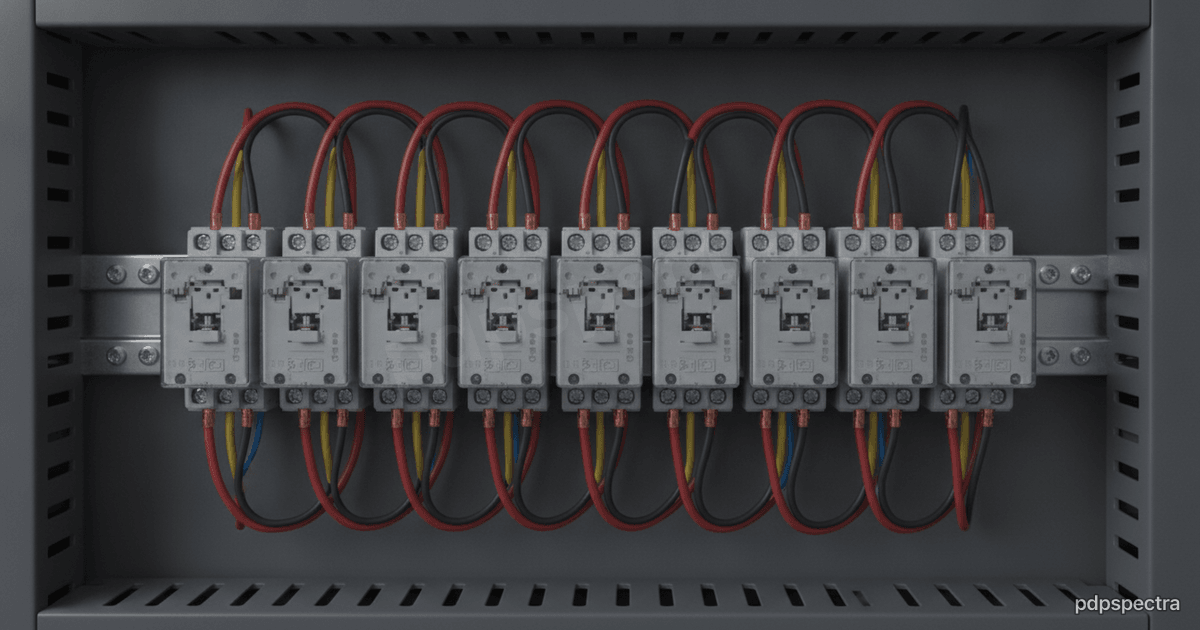
The default operational stack we reach for is unglamorous on purpose: ClickHouse for the query layer, Airflow for orchestration, and dbt for transformations. Each one is boring in the best sense — proven, debuggable, and surrounded by people who have already hit the problems you are about to hit.
ClickHouse is the performance-first core. When automation depends on scanning millions of rows to decide what to act on, query speed stops being a nice-to-have and becomes the thing that decides whether your workflow finishes inside its window. Returning aggregates in milliseconds instead of minutes is what lets a scheduling sweep or a billing run complete on time, every time.
dbt is where business logic lives as version-controlled, tested SQL. “An invoice is overdue when the due date has passed and status is not paid” is a definition that belongs in one place, tested, not copy-pasted across five scripts that quietly drift apart. When the logic is a dbt model, every workflow reads from the same source of truth.
Airflow is the scheduler and the spine. It runs the steps in order, retries the ones that fail, and — critically — gives you a place to see what ran, what failed, and why. You could replace it with cron and a prayer. Teams that do spend their evenings reconstructing what happened from log files.
The point is not these three specific names. It is the principle: pick load-bearing tools that earn their place, strip the trendy framework, and keep the parts that survive contact with production. Boring tools win because boring means understood, and understood means fixable at 2 a.m.
Idempotency is the feature#
If there is one idea that separates Operational Automation that ships from automation that gets switched off, it is idempotency. An idempotent workflow produces the same result whether it runs once or five times. Run the billing job twice by accident and no customer is charged twice. Re-run a failed scheduling sweep and no patient gets two confirmation messages.
This sounds academic until you operate real systems, where everything fails partway through eventually. A network blip, a timeout, a deploy mid-run. When that happens, your only safe recovery is to run the job again — and you can only do that fearlessly if running again is harmless. Idempotency is what makes retries safe, and retries are what make automation survive the real world.
In practice this means designing around state, not actions. Instead of “send a reminder,” the workflow asks “which invoices need a reminder that has not already been sent,” records that the reminder went out, and skips anything already handled. The job becomes a function of current state, so re-running converges instead of duplicating. It is slightly more work to build and the reason the system can run unattended.
”The system runs without us”#
The bar for Operational Automation is not “it works when I run it.” It is “it runs without us, and we find out when something is wrong before the customer does.” That second clause is observability, and it is non-negotiable.
Every workflow needs to answer three questions on demand: did it run, did it succeed, and if not, what broke. That means structured logs, run history, and alerting that fires on failure — not a person remembering to check a dashboard. The goal is a system where silence is genuinely good news because failure is loud.

There is a real tradeoff here worth naming. Building for unattended operation costs more upfront than a script that works on your laptop. You write the idempotency logic, the retries, the logging, the alerts. A demo that runs once needs none of that. But the demo is not the deliverable — the system that runs every night for two years without a human babysitting it is the deliverable, and that system is mostly the unglamorous parts.
Three workflows where this plays out#
Billing. A nightly Airflow job reads a dbt model defining overdue accounts, generates reminders, records each as sent, and reports a summary. Idempotency guarantees no double-billing; observability flags the night the payment gateway was down so a human steps in instead of silently dropping a run.
Scheduling. In a Hospital Management System, an automation confirms appointments, fills cancellations from a waitlist, and flags double-bookings. ClickHouse makes the conflict scan fast enough to run continuously; idempotent design ensures a re-run never sends duplicate confirmations to anxious patients.
Alerts. In a School ERP, a workflow watches attendance and grade thresholds and notifies staff when a student needs attention. The logic is a tested dbt model, the schedule is Airflow, and the alert fires once per event — not every time the job happens to run.
None of these need a trendy framework. They need a warehouse that can answer fast, logic that lives in one tested place, a scheduler that retries safely, and the discipline to build for the day you are not watching. That is what shipping looks like.
When a low-code platform is actually the right call#
Boring-tools-win is a default, not a religion. There are cases where the warehouse-driven stack is overkill and a low-code automation platform is the honest answer. A handful of simple triggers with no heavy data dependency — route a form submission to a channel, sync two SaaS tools, fire a webhook on an event — does not justify standing up Airflow and dbt. Reaching for the heavyweight stack there is the same mistake in the opposite direction: choosing the tool for its impressiveness instead of for the job.
The test is data gravity. If the decision about what to do depends on scanning and joining real volumes of business state — millions of rows, multiple sources, logic that must stay consistent across workflows — you want the warehouse driving it, because that is exactly the work warehouses are built for. If the workflow is a thin pipe between two APIs with no real query behind it, use the thin tool. The skill is not always picking the same stack. It is matching the weight of the tool to the weight of the problem, and being honest when the boring heavyweight is more than the job needs.
Where most teams go wrong first#
The failure rarely starts with the wrong tool. It starts with building for the demo instead of for the second year. The first version runs on a laptop, impresses someone in a meeting, and then quietly accumulates manual workarounds because it was never built to run unattended. By the time anyone admits the automation is not trusted, the cost of retrofitting idempotency and observability feels larger than the cost of just doing the work by hand — so the work goes back to being manual, and the automation becomes another item in the graveyard.
Avoiding that is mostly a decision made on day one: build the unglamorous parts first. Idempotency, retries, logging, and alerting are not polish you add later. They are the load-bearing structure. Skip them and you have not built automation; you have built a script with good intentions.
Automation that ships is boring on purpose — it runs without you and tells you when it doesn’t. Bring us your messiest manual workflow at /#contact.