Sakana's Fugu and the Case Against Marrying One LLM Vendor
Sakana AI's Fugu routes across a pool of frontier models behind one OpenAI-compatible API. The real lesson for your stack: never hardwire to one provider.

On June 22, 2026, Sakana AI announced Fugu, a multi-agent system that treats a set of frontier models as a single “agent pool” and routes each request to whichever combination is best for the task. The pitch is that you talk to one endpoint and Fugu decides — behind the curtain — which underlying model does the work, then aggregates the result. Sakana published benchmark claims to match: Fugu Ultra at 73.7 on SWE-Bench Pro and 95.5 on GPQA-D, with results it says match or beat Claude, Gemini, and GPT working alone, per its technical report.
The benchmark horse race is the least interesting part. The detail that should change how you build is buried in the product page: Fugu speaks an OpenAI-compatible API, and Sakana frames flexible model swapping as a feature that lets the system “dynamically circumvent the impact even if specific models are restricted” — a nod to the recent US restrictions on certain frontier models reported by VentureBeat. In other words, the marquee selling point of a new frontier system in 2026 is not being married to any one model. That is a tell. The market is pricing vendor lock-in as a risk, and your architecture should too.
What Fugu actually is — and what it isn’t#
Strip away the orchestration language and Fugu is a routing layer with a standard interface in front of it. There are two variants: plain Fugu, tuned for everyday coding and review at lower latency, and Fugu Ultra, which fans a request across a larger pool of experts for hard reasoning, paper reproduction, and Kaggle-style problems at the cost of slower responses. The research underneath — Sakana’s TRINITY and “The Conductor” papers at ICLR 2026 — is about a lightweight coordinator that hands Thinker, Worker, and Verifier roles to different LLMs and learns coordination strategies in natural language.
That is genuinely useful work. But notice what it does for you as a builder: it makes “which model” a runtime decision rather than a build-time commitment. The orchestration is the means; the swappability is the payoff. You can get most of that payoff in your own stack without outsourcing routing to a third party — and in many cases you should, because handing your routing logic to a vendor is itself a form of lock-in wearing a clever hat.
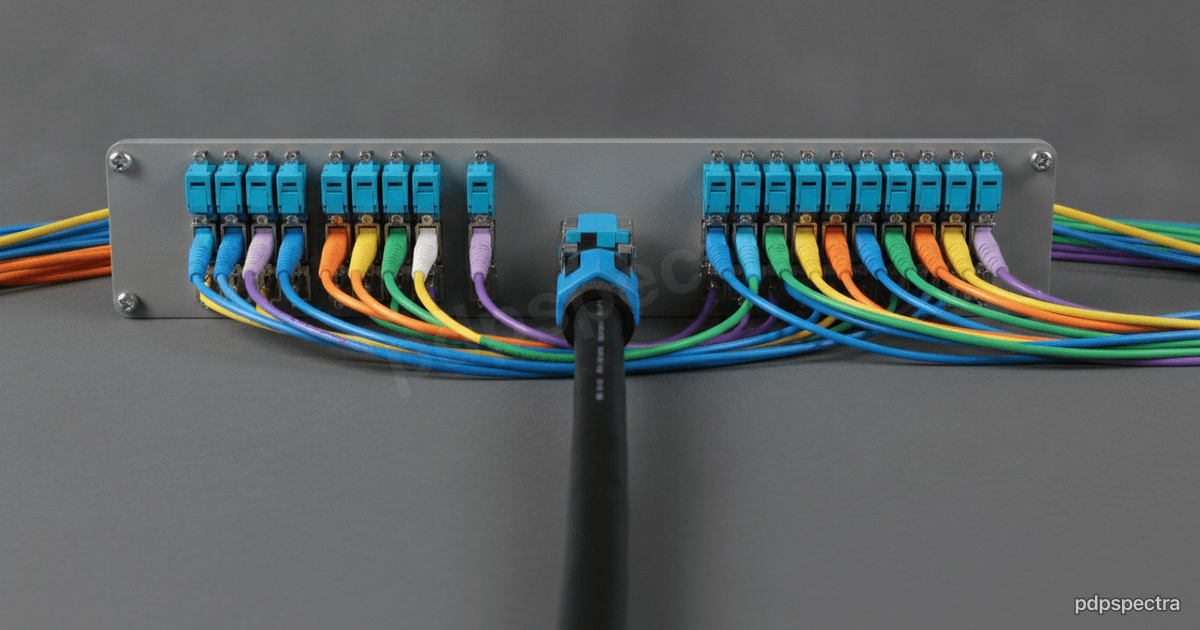
Lock-in is rarely a decision — it’s a hundred conveniences#
Nobody sits in a planning meeting and says “let’s couple ourselves permanently to one provider.” Lock-in accretes. It shows up in places that are cheap to add and expensive to unwind:
- SDK gravity. You import the vendor’s official client, and soon their request/response shapes leak into your domain code. Function-calling schemas, content-block formats, and streaming event types differ across providers, and each difference that touches your business logic is a thread you’ll have to cut later.
- Prompt coupling. Prompts get tuned to one model’s quirks — its system-message conventions, its tool-use grammar, its refusal patterns. Move to another model and the prompts silently underperform.
- Feature lean. You build on a provider-specific capability — a particular caching scheme, a bespoke batch endpoint, a proprietary embeddings format — and now portability costs a redesign, not a config change.
- Contract gravity. Committed-spend deals quietly make the “free” choice the only economic one, even when a cheaper or better model ships next quarter.
The cost isn’t theoretical. When a model gets deprecated on a vendor’s timeline, when pricing changes, when a capability you depend on gets rate-limited, or when — as Sakana explicitly calls out — a model becomes restricted in your jurisdiction, the team that abstracted its LLM client runs a swap and a regression suite. The team that didn’t runs a migration project. This is the same pattern we wrote about with custom AI silicon: the discipline that survives every wave is treating the swappable thing as a backend, not a dependency baked through your code.
The abstraction layer that actually earns its keep#
The fix is boring, and boring is the point. Boring tools win when they earn it — when they keep working through a vendor’s deprecation email and a sudden price hike. Put a thin internal interface between your application and any LLM, and let providers sit behind it as interchangeable implementations.
Concretely, that means a few deliberate choices:
Define your own request and response types. Your code should pass around your Message, ToolCall, and Completion objects — not a vendor’s. Each provider gets a small adapter that translates to and from its wire format. When a new model ships, you write one adapter, not a refactor. The fact that the industry is converging on an OpenAI-compatible shape — Fugu adopted it precisely so existing integrations work unchanged — makes this cheaper than it was two years ago, but a shared wire format is not the same as a clean boundary. You still want the seam to be yours.
Keep prompts and tool schemas as data, not code. Store them as versioned artifacts keyed by capability, not by vendor. When you swap models, you’re editing configuration and re-running evals, not chasing string literals through the codebase.
Route on capability, not brand. Your application asks for “a fast coding model” or “a high-accuracy reasoning model,” and a routing config maps that intent to a concrete model. That config is the one place model identity lives. This is exactly the indirection Fugu sells — and you can own it with a routing table and a feature flag instead of a new external dependency in your critical path.
Hold your evals at the boundary. This is non-negotiable. The moment you swap a model, behavior shifts — refusal rates, formatting, tool-call reliability, latency. Without a regression suite that proves quality held on your traffic, a model swap is a silent quality gamble. Evals are what make portability safe rather than merely possible. No eval harness, no swap.

The multi-agent tradeoff — orchestration isn’t free#
Fugu’s other lesson is a cautionary one. Multi-agent orchestration — fanning a task across several models and aggregating — buys accuracy, and the benchmark deltas are real. But it is not free, and the costs are exactly the ones that hurt in production.
Latency compounds. A coordinator that runs Thinker, then Worker, then Verifier across multiple turns is serializing several model calls where a single call used to do. Sakana is candid that Fugu Ultra trades response time for quality. Cost compounds too: at the published Fugu Ultra rate of $5 per million input tokens and $30 per million output, a workflow that invokes several experts per request can cost multiples of a single-model call. And debuggability suffers — when the output is wrong and you can’t see which agent produced what, root-causing a regression gets harder.
The engineering judgment here is the same one we apply to any AI implementation: reach for multi-agent orchestration where the accuracy genuinely justifies the latency and cost — hard reasoning, code synthesis, high-stakes extraction — and use a single well-chosen model everywhere else. Orchestration is a tool, not a default. The teams that bolt a multi-agent framework onto every request end up paying three times the cost for a chatbot that answers FAQ.
Where the data discipline comes in#
You can’t make any of these calls without measurement, and this is where lock-in avoidance becomes a data problem rather than a philosophy. Per-request you want to capture which model served it, token counts in and out, latency by stage, cost, and an eval verdict. Those are just events, and events belong in a system built to aggregate them.
The same operational engine we use for Data Platforms work — ClickHouse for the analytics, Airflow for the pipelines, dbt for the modeling — turns raw LLM telemetry into a live per-model quality-and-cost table. Once that table exists, “should we swap providers?” stops being an argument and becomes a query. The same pattern that drives Operational Automation behind a Hospital Management System or a School ERP applies cleanly to model selection: instrument the events, warehouse them, let the numbers decide. You don’t pick a model from a launch blog; you pick it by querying your own traffic.
The move: routing is yours, models are rented#
Read Fugu correctly and the takeaway isn’t “adopt Fugu.” It’s that even the people building frontier orchestration are designing for a world where no single model is permanent — restrictions change, prices move, capabilities leapfrog quarterly. Their headline feature is the freedom to swap. Build that freedom into your own stack and you get it without adding a vendor to your critical path.
So the call is plain. Put a thin client interface between your app and any provider. Keep prompts and schemas as versioned data. Route on capability through one config. Guard every swap with evals on your real traffic. Measure cost and quality per model like an SLO. Do that, and the next model that claims the crown is a config change you ship on a Tuesday — not a vendor you’re married to.
Swappable model clients are a design decision, not a migration project. We build the abstraction and the eval harness before the lock-in sets in. Talk to pdpspectra.