AI in Aging and Longevity Research
Epigenetic aging clocks, AI for target discovery in senescence and reprogramming, and an honest accounting of where the rigor ends and the hype begins.

Few fields mix real science and real nonsense as freely as longevity. The same week brings a rigorous methylation study in a respectable journal and a supplement brand quoting an “aging clock” off a cheek swab to sell you pills. AI sits in the middle of this, and it cuts both ways: it is producing genuinely useful tools for measuring and intervening in aging, and it is supplying a fresh vocabulary for overclaiming. An engineer’s job here is to hold the line between the two. This post is an attempt at that line.
Aging clocks: the most useful biomarker, and its hard limit#
The foundational tool is the epigenetic clock. DNA methylation — chemical marks on the genome that shift in patterned ways over a lifetime — turns out to predict chronological age with startling accuracy. Steve Horvath’s 2013 clock estimated age across nearly all human tissues from a few hundred methylation sites, and the second generation — PhenoAge, GrimAge, and successors — went further, predicting not just age but mortality and disease risk by training against clinical outcomes rather than the calendar. When such a clock reads a body as “older” than its birthday, that gap correlates with worse health trajectories.
This is where ML genuinely helps. A clock is a regression from methylation features to an age or risk target, and the modeling has matured from elastic-net regressions to deep networks. The interesting work is the biologically informed deep-learning clocks that constrain the model to known regulatory structure so the predictions are interpretable — you get not just a number but a handle on which biological processes drive it. The clinical signal is real enough that a 2025 Lancet Healthy Longevity systematic review and meta-analysis tied DNA-methylation-clock age to frailty across multiple cohorts. These are not horoscopes. They are measurements.
But here is the limit that the hype runs straight past: an aging clock is a biomarker, not a validated surrogate endpoint, and it is correlation, not proven causation. A clock tells you that a methylation pattern tracks with age and risk across populations. It does not tell you that moving the clock changes the underlying biology, or that an intervention which lowers your clock reading will extend your healthspan. Those are separate, much harder claims, and most of them are unproven. Treating a clock reading as a treatment target — optimizing the biomarker instead of the outcome — is the single most common error in consumer longevity, and it is exactly the error a careful team refuses to make.
AI for target discovery: senescence and the search for what to hit#
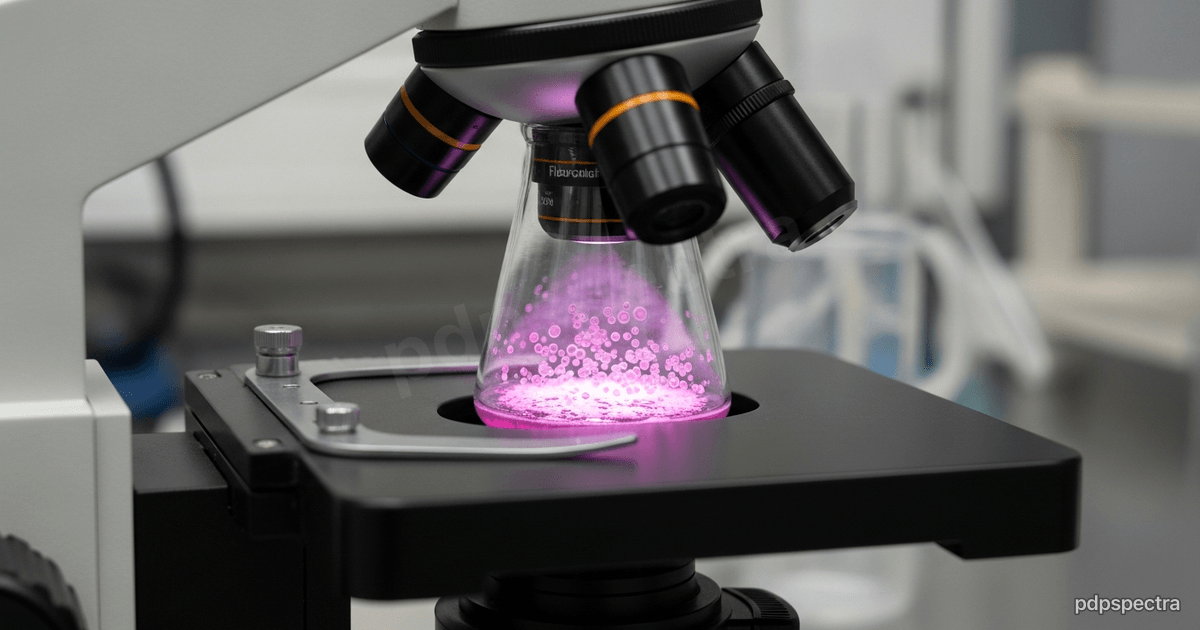
Below the measurement layer is the intervention layer, and this is where AI is doing more interesting work. Two biological programs anchor most serious aging research: cellular senescence — cells that stop dividing but linger and secrete inflammatory signals — and the broader machinery of cellular aging that partial reprogramming aims to reverse. Both are hunting grounds for target discovery, and both are data problems that ML is suited to.
The senescence angle is conceptually clean. If you can characterize the transcriptional and epigenetic signature of a senescent cell precisely enough, you can search for interventions — senolytics that kill these cells, or senomorphics that quiet their harmful secretions — and you can screen candidate compounds and targets computationally before committing to animal work. The honest framing is the same one that applies everywhere in computational discovery: the model narrows a hypothesis space; the wet lab is still the arbiter. A predicted senolytic target is a lead, not a result.
The reprogramming angle produced the most striking AI result in the field. Yamanaka factors — a set of transcription factors that can reset a cell’s identity back toward a stem-cell state — are the engine of cellular rejuvenation research, and improving them is a protein-engineering problem. Retro Biosciences, working with OpenAI’s GPT-4b micro model, redesigned two of those factors and reported engineered variants — RetroSOX and RetroKLF — driving greater than 50-fold higher expression of stem-cell reprogramming markers than the wild-type proteins in vitro. MIT Technology Review’s coverage put the model in context: a model trained on protein sequences and structure proposing variants that differ from the natural protein by dozens of amino acids, with a meaningful fraction outperforming both wild-type and hand-engineered versions. That is a real, specific, lab-confirmed advance in a hard design problem — exactly the kind of result worth taking seriously.
Note what it is and is not. It is a better tool for making induced pluripotent stem cells, cutting reprogramming timelines reported in weeks down toward days. It is not, by itself, a demonstration that anyone has safely reversed aging in a person. The distance between “better reprogramming factors in a dish” and “a therapy that extends human healthspan” is enormous, and most of it is unconquered.
It is worth being precise about why a protein-design win is the part most amenable to AI. Redesigning a transcription factor is a constrained search over sequence space with a measurable in-vitro readout — reprogramming-marker expression — that you can score in a dish in days. That tight, fast feedback loop is exactly what generative models thrive on, and it is why the most credible AI results in aging are upstream protein- and target-engineering wins rather than whole-organism claims. The further you move from a clean molecular assay toward “does the animal live longer and healthier,” the longer and noisier the loop becomes, the harder it is to attribute any effect to the intervention, and the less the model can do for you. Keep that gradient in mind when you read a longevity headline: the closer the claim sits to a fast, falsifiable assay, the more you should trust it.
The hype problem, stated plainly#
Longevity attracts overclaiming because the stakes are universal and the timelines are long enough that nobody is forced to pay up soon. So here is the sober accounting an engineer should keep.
Partial reprogramming carries a real cancer risk that the optimistic framing elides. The whole danger of pushing cells back toward a pluripotent state is that pluripotent cells form teratomas. The research goal — partial reprogramming that rejuvenates without crossing into pluripotency — is threading a genuinely sharp needle. Impressive mouse results exist, and companies pursuing this are entering early human safety testing, but “promising in mice and entering Phase 1” is the beginning of the validation gauntlet, not the end. The graveyard of mouse-validated interventions is enormous.
Biomarker improvement is not outcome improvement. A study showing an intervention lowers an epigenetic-clock reading is interesting and not sufficient. The clock could move without the biology following, especially since the clock was trained to correlate with age, not to mechanistically cause it. Demand outcomes — function, healthspan, hard endpoints — before believing a longevity claim, and discount anything sold purely on a moved biomarker.
The consumer layer is where rigor goes to die. Direct-to-consumer “biological age” tests built on clocks of varying quality, sold with intervention advice, are mostly ahead of the evidence. A clock validated for population epidemiology is not automatically valid for telling one individual whether their morning routine is working. The measurement noise at the individual level is real, and the causal story to act on usually is not there.
What a serious AI program in aging actually looks like#
Strip away the immortality marketing and aging research is an ordinary, hard AI implementation: high-dimensional biological data, models that propose hypotheses, and a long, expensive validation loop where most hypotheses die. The teams doing it well are unglamorous about it. They version their methylation and transcriptomic data. They hold out cohorts honestly — by donor and by site, never by random sample — because clocks are notoriously easy to overfit and a leaky split makes any clock look brilliant. They treat a model’s output as a lead to be falsified, not a fact to be marketed.
That discipline is the same backbone we build for any serious Data Platform. The traceability that makes a Hospital Management System trustworthy — every record auditable from raw input to reported outcome — is exactly what a longevity program needs, because the field’s credibility problem is fundamentally a provenance and reproducibility problem. When a clock reading or a predicted target informs a decision, you want to trace it back through model version, training cohort, and preprocessing, and you want the validation result fed back into the next round. Operational Automation of that discovery-to-validation cycle is what lets a program learn from every wet-lab outcome instead of cherry-picking the flattering ones.
The honest 2026 read: AI is producing real value at the measurement layer, where clocks are useful population biomarkers, and at the discovery layer, where models like the one behind RetroSOX and RetroKLF are genuinely improving the tools of cellular rejuvenation. It has not abolished aging, validated a longevity drug in humans, or turned a biomarker into a cure. The field’s best work is sober, instrumented, and explicit about the gap between a moved clock and a longer healthspan. The field’s worst work blurs that gap on purpose. Engineering rigor — versioned data, honest holdouts, outcomes over biomarkers, an auditable loop — is the thing that keeps you on the right side of the line.
Building an aging or biomarker program and need the rigor underneath — versioned cohorts, honest holdouts, an auditable discovery-to-validation loop? Talk to our team. We engineer the data platforms that keep computational biology honest.