AI Food Traceability in 2026: FSMA 204, IBM Food Trust, Wholechain and the Compliance Deadline
IBM Food Trust, Wholechain, Carrefour blockchain, Topl — FDA FSMA 204 compliance, allergen tracking and recall management in 2026.

Food traceability is the AI category where the regulatory clock is the loudest forcing function. The FDA’s FSMA Section 204 final rule, which requires enhanced traceability records for a specific list of high-risk foods, has a compliance deadline of 20 January 2026 — pushed back from the original 2026 deadline in a March 2025 announcement, with the new effective date now generally expected to fall in the 2027 window after industry pushback and FDA’s own re-examination. This post is a snapshot of where the major platforms sit, what compliance actually requires, and where AI delivers value beyond the regulatory floor.
The FSMA 204 landscape#
FSMA 204 — the FDA’s Food Traceability Rule under section 204(d) of the Food Safety Modernization Act — covers a Food Traceability List that includes leafy greens, shell eggs, certain ready-to-eat deli salads, tomatoes, peppers, cucumbers, herbs, tropical tree fruits, sprouts, finfish, crustaceans, molluscan shellfish, nut butters, and several other categories. Covered entities must maintain Key Data Elements at Critical Tracking Events — harvest, cooling, packing, transformation, shipping, receiving — and provide them to the FDA within twenty-four hours of request in an electronic, sortable spreadsheet.
The compliance question that consumed the industry through 2024-2025 was less about the legal requirements and more about the data engineering work to capture lot-level events at speed and accuracy across multi-tier supply chains. Most growers, processors and distributors discovered that their existing ERP, WMS and barcode systems could not produce a clean FSMA 204 record without substantial integration work — which is why the FDA’s 2025 reconsideration extended the runway.
The vendor map#
IBM Food Trust, built on Hyperledger Fabric and launched in 2018 with Walmart, Carrefour, Nestle and Tyson as early participants, remains the most prominent multi-party traceability platform. Its model — permissioned blockchain with participants writing lot-level events to a shared ledger — has produced real production deployments at Walmart for leafy greens and at Carrefour for several product lines. Wholechain, focused initially on seafood and now broader, has built a strong North American footprint particularly among smaller processors who needed an FSMA-204-ready solution without IBM Food Trust’s enterprise overhead.
Carrefour’s blockchain initiative — initially built on Hyperledger Fabric and increasingly integrated with the Topl carbon-and-supply-chain layer — covers dozens of product lines including poultry, milk, eggs and produce. The Topl partnership announced in 2023-2024 extended Carrefour’s traceability work to include carbon-footprint disclosure at product level, which positions the broader platform for both FSMA 204 and the EU’s growing sustainability disclosure requirements. Other meaningful players include FoodLogiQ (acquired by Trustwell in 2022), TE-FOOD, Provenance and the in-house platforms several large CPG operators have built on Snowflake, Databricks or Microsoft Fabric.
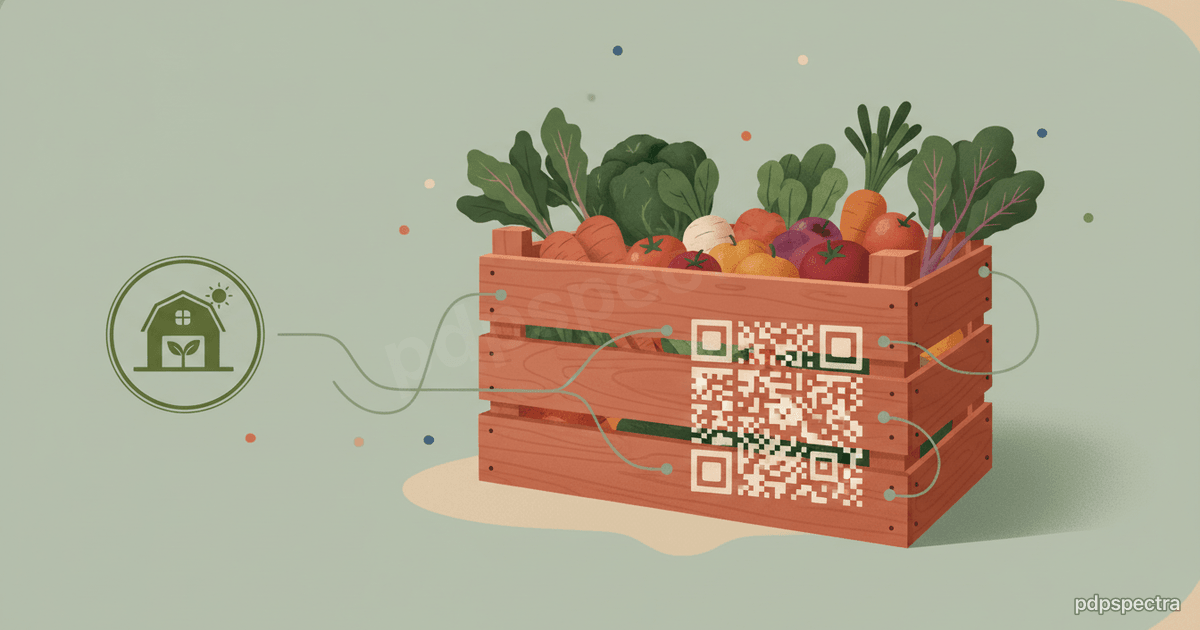
What blockchain actually does and does not do#
The 2018-2021 blockchain-in-food story was over-marketed and produced a backlash that persists. The honest 2026 position is narrower: a permissioned, multi-party ledger is useful when several entities along a supply chain need a shared, append-only record of events that none of them controls unilaterally. It is not magic — it does not verify that the data written is correct, it does not solve identity binding at the source, and it does not on its own satisfy FSMA 204.
The platforms that work treat blockchain as a coordination layer on top of conventional ERP and event-stream infrastructure rather than a replacement for it. Where blockchain genuinely helps is in multi-tier visibility — a CPG company can see whether a lot was picked, packed, shipped and received at each tier without depending on a single intermediary to provide the data. Where blockchain does not help is in cases where one party controls the supply chain end to end; a private database does the same work more cheaply.
Where AI shows up#
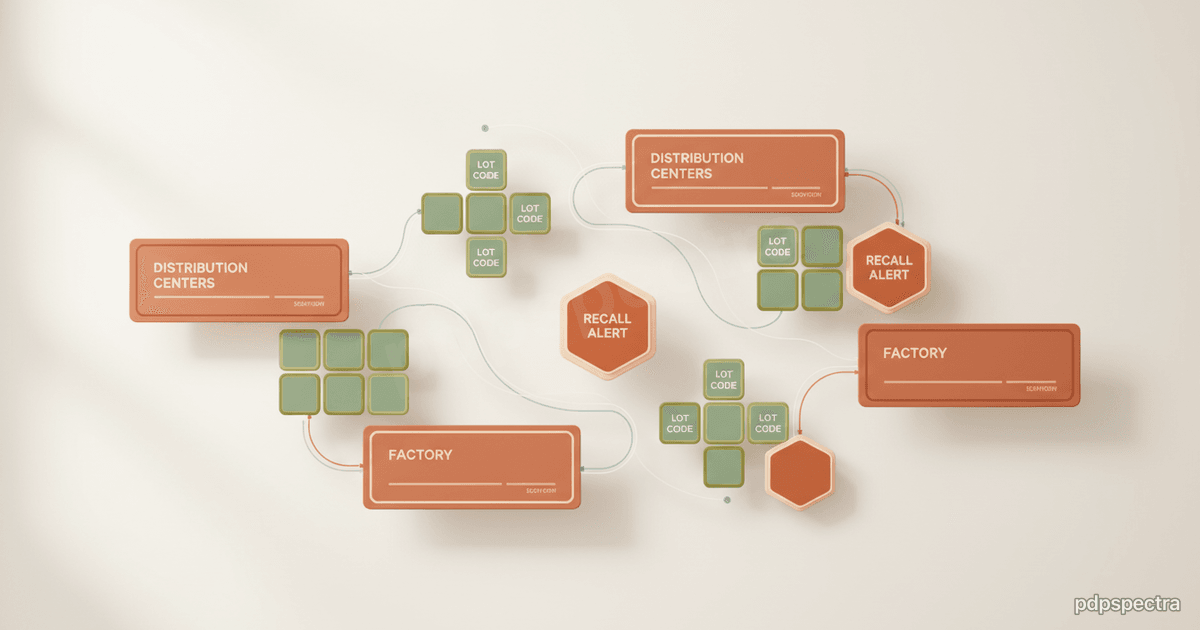
The AI layer in traceability sits in three places. First, document and label OCR — extracting lot codes, dates and PTI (Produce Traceability Initiative) labels from photographs, scanned shipping documents and supplier paperwork that does not yet flow through structured EDI. Second, anomaly detection on event streams — flagging chain-of-custody gaps, time inconsistencies and unusual transformation patterns that indicate either data quality problems or genuine compliance issues. Third, recall management — when a lot is implicated in an outbreak or quality event, AI-driven downstream-trace tools accelerate the identification of affected products, customers and lots much faster than the manual processes the industry historically ran.
The recall-management case is the one that has produced the most measurable ROI. The 2018 romaine lettuce outbreak forced the industry to throw away product whose actual contamination status was unknown because traceability was inadequate. Modern platforms with structured event ledgers and AI-driven downstream-trace tools can isolate affected lots in hours rather than days, which materially reduces both the public-health risk and the economic loss.
Allergen tracking and the parallel regulatory push#
Allergen management is a parallel regulatory pressure that operates on a different timeline than FSMA 204 but increasingly uses the same data infrastructure. The EU’s Food Information to Consumers regulation, the FDA’s FALCPA framework with sesame added as the ninth major allergen in 2023, and Codex Alimentarius guidance all push toward documentable allergen lot-tracking across manufacturing lines, cross-contact controls and rework handling. The traceability platforms that handle FSMA 204 cleanly tend to also handle allergen lot tracking cleanly, because the underlying data model — lot, location, transformation, parent-child relationships — is the same.
What deployment actually requires#
The companies that have implemented traceability well share a pattern: they invested first in source-data capture — lot-level scanning at every Critical Tracking Event, not just at receiving — before they invested in the analytics or ledger layer. The companies that started with the platform and tried to retrofit source-data capture afterward have produced expensive systems with thin data underneath. The data engineering question that matters most is whether each handoff in the supply chain produces a clean, timestamped, lot-attributed event into the system of record.
Where pdpspectra fits#
Our business automation practice and data engineering team help growers, processors and CPG operators build the lot-level event capture, OCR and reconciliation layer that turns FSMA 204 from a compliance burden into a recall-response capability. We work alongside IBM Food Trust, Wholechain, FoodLogiQ and in-house ledger deployments.
Related reading: AI in agriculture and precision farming, Australia agritech grain and cotton in 2026, and Brazil agritech soy corn precision in 2026.
Food traceability in 2026 is a regulatory-driven category where the data engineering matters more than the ledger choice. Talk to our team about your traceability platform.