AI in Last-Mile Delivery 2026: Nuro, Zipline, and the Lessons from Amazon Scout
Production last-mile delivery AI in 2026 — Nuro, Starship Technologies, Serve Robotics, Zipline, Manna, the Amazon Scout retreat, and last-mile sortation (Berkshire Grey, Symbotic).

Last-mile delivery is the most visible and the most expensive segment of the delivery chain, and over the past decade it has been the focus of more venture capital, hyperscaler investment, and operational experimentation than any other logistics segment. Sidewalk robots, drones, autonomous vehicles, and increasingly sophisticated sortation have each been pitched as the answer. By 2026 the picture is much more nuanced — several of the early bets have retreated, some have quietly grown into real businesses, and the unglamorous part of last mile (sortation, dispatch, customer experience) has produced more durable AI gains than the headline robotics plays.
This is where last-mile AI actually sits in 2026.
The Amazon Scout retreat and what it taught#
Amazon Scout — the six-wheeled sidewalk delivery robot — was put on indefinite pause in 2022 after a multi-year pilot. The official statement was about not meeting customer needs; the substance was that the unit economics did not work and the operational complexity did not improve enough with scale. Amazon redirected the effort into other parts of the logistics network.
The Scout retreat is the canonical lesson for last-mile robotics. The pitch was always “robots replace expensive human delivery drivers.” The reality at pilot scale was that each robot needed a chase vehicle, a teleoperator was frequently in the loop, the sidewalk infrastructure was unpredictable (broken curbs, snow, parked cars, pets), and the labor cost of the operations team scaled at roughly the same rate as a small human driver fleet would have.
The teams that have kept going in sidewalk robotics learned from this. They concentrated geographically (a few campuses or dense urban zones rather than national rollout), they accepted teleoperation as part of the model rather than a temporary crutch, and they targeted use cases where the alternative is genuinely worse than the robot.
The sidewalk robot survivors: Starship and Serve#
Starship Technologies has been one of the more durable sidewalk-robot operators, with the largest deployed fleet (mostly on university campuses in the US, UK, and a few European cities). The economics work on campus environments because the deliveries are short, the sidewalk infrastructure is predictable, the customer is reachable, and the operational density is high enough to justify the local field team.
Serve Robotics (the spinout from Postmates / Uber’s robotics group) operates in Los Angeles primarily with restaurant and convenience delivery for Uber Eats and 7-Eleven. Serve has been more public about their commercial economics and made meaningful progress on autonomy rate (the share of delivery time without remote operator intervention).
The honest 2026 read on sidewalk robots is that they are a real business in narrow geographies and the path to broad national deployment remains unclear. The unit economics work in specific contexts and do not generalize easily.
The autonomous-vehicle approach: Nuro#
Nuro took a different bet — purpose-built small autonomous vehicles operating on the road rather than the sidewalk. Their R2 and the larger Nuro vehicle generations have run pilots with Domino’s, Kroger, FedEx, and others. Nuro’s 2024 strategic shift was notable — they refocused away from their own delivery service toward licensing their autonomy stack to OEMs and other operators, which acknowledged that being a delivery operator and an autonomy platform was a hard double-business.
The lesson from Nuro mirrors Scout — the autonomous part is technically impressive, the operational integration with shipper workflows is harder than it looks, and the unit economics depend heavily on what you are comparing against.
Drones: Zipline, Manna, Wing#
The drone delivery story has been more interesting outside the US.
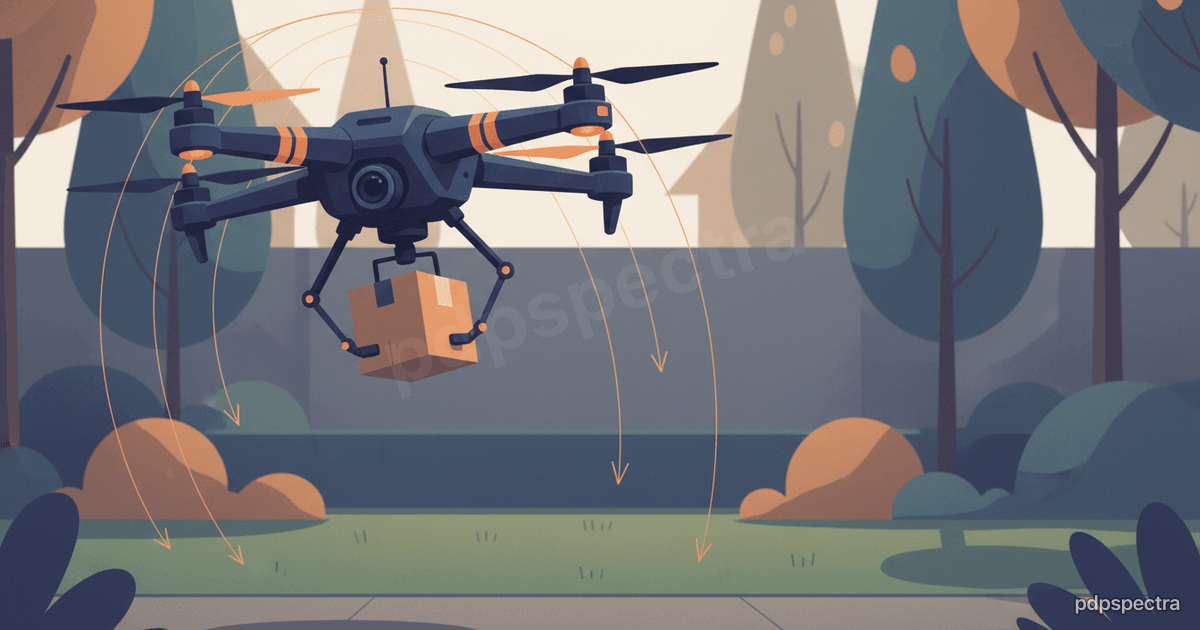
Zipline is the unambiguous success story of the last decade in commercial drone delivery, originating in medical delivery in Rwanda and Ghana and expanding into the US for healthcare and into Asia. Zipline’s instinct from day one was to focus on a use case (medical, then critical-need delivery) where the alternative was genuinely worse — a four-hour ground trip on bad roads is much worse than a 30-minute drone flight for blood products. That focus has carried them through.
Manna built a domestic drone delivery service in Ireland (Dublin and Galway) for food and convenience. They are operating, not just demoing. Wing (Alphabet) operates in suburban Australia and parts of the US. Amazon Prime Air has been launching slowly with FAA approvals across 2024 and 2025.
The honest state of drone delivery in 2026 is that it is real in specific geographies — Ireland, Australia, parts of Texas and Arizona, parts of sub-Saharan Africa — and the regulatory pace in the US has been the gating constraint. The FAA Part 108 rulemaking that progressed through 2024 and 2025 has started to open broader operations but the national-scale drone delivery vision is not yet a reality.
The sortation reality: Berkshire Grey, Symbotic, AutoStore#
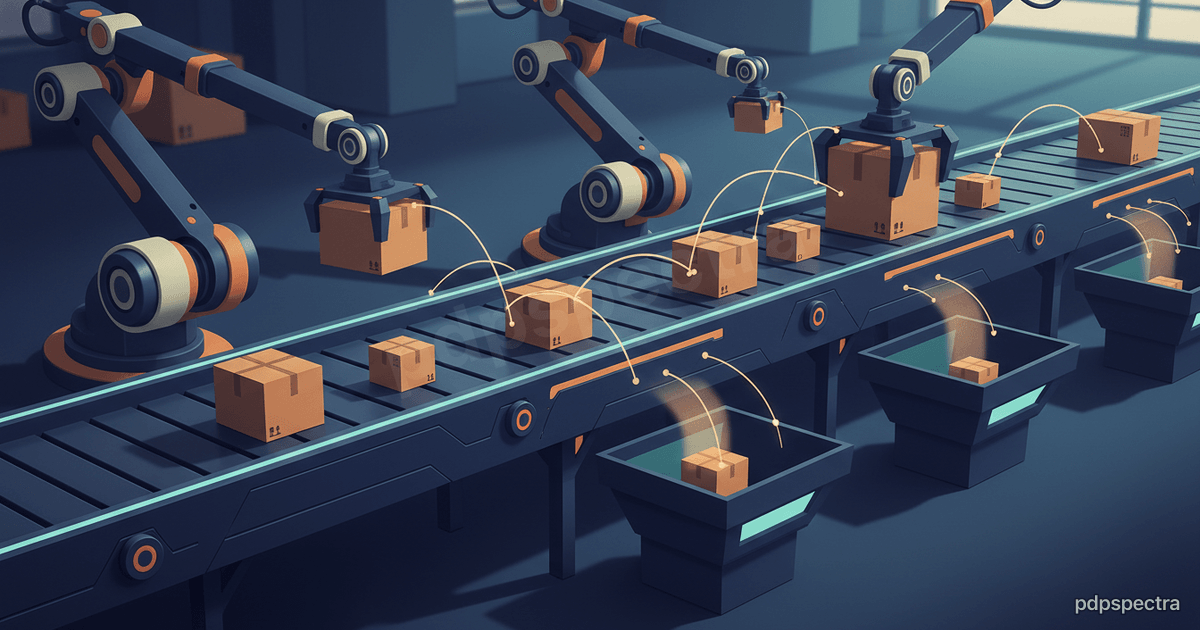
The most consequential last-mile AI investment of the past five years was not in the visible last-mile leg but in the sortation immediately before it. Every parcel that goes out the door of a delivery station has been routed, sorted, and staged by an increasingly automated system.
Symbotic went public in 2022 and has continued to expand its automation deployments at Walmart and other major retailers. The technology is essentially a robotic case-handling and sortation system with substantial software underpinning.
Berkshire Grey (which went through public listing and significant restructuring) operates in adjacent sortation automation for ecommerce parcels.
AutoStore dominates the dense storage automation market with installations across retailers and 3PLs globally.
Locus Robotics and 6 River Systems (acquired by Shopify and then divested in a complex sequence) operate in autonomous mobile robot picking inside fulfillment centers.
The aggregate effect of this segment is that the cost per parcel of moving items through sortation has fallen materially in the past five years, and AI for picking, slotting, and routing inside the delivery station has been a quieter but more economically meaningful win than the visible last-mile robots.
The boring AI wins in last mile#
Three less-glamorous AI applications have produced more durable last-mile gains than any of the robotics plays.
ETA prediction — the model that tells the customer “arriving in 14 minutes” has improved dramatically. The customer experience and the operational efficiency gains compound, because reliable ETAs reduce missed deliveries, reduce customer calls, and let dispatch make better real-time decisions.
Address resolution and access notes — AI extracting structured access information from past delivery history and customer notes (gate code, leave at side door, beware of dog) has eliminated a lot of failed delivery attempts.
Driver app intelligence — turn-by-turn that is delivery-aware rather than just driving-aware, with stop sequencing that adjusts in real time, photo proof of delivery with AI checks for completeness, and exception flows that are smoother than they were.
These are the AI deployments that fleet operators care about and that the major TMS and last-mile platforms (Bringg, FarEye, Onfleet, the courier-mode features in Samsara and similar) have been investing in.
Where the gaps remain#
The middle-mile-to-last-mile handoff is still operationally messy at most parcel carriers. Apartment delivery and high-rise complexes remain harder than single-family in most markets. Returns logistics is a known cost center with much less AI attention than the outbound leg. Rural last-mile economics still favor the postal service in most countries and will continue to for the foreseeable future.
Where pdpspectra fits#
Our data engineering practice and AI integration practice help last-mile operators, marketplaces, and parcel carriers build the dispatch, ETA, and exception-handling systems that produce most of the realized AI value in last mile.
Related reading: the last-mile delivery AI post, AI fleet routing beyond OR-Tools, and TMS-agnostic logistics data platforms.
Last-mile AI is real, the boring wins matter most, and the headline robotics stories are more nuanced than the marketing. Talk to our team about your last-mile systems.