AI Loss Prevention in Retail: Everseen, Veesion, Trigo, and the Self-Checkout Reckoning
Retailers lost an estimated 142 billion USD to shrink in 2025. Where computer vision actually works against organized retail crime, where Standard AI failed, and what Walmart and Lowe's learned from their pilots.

The US National Retail Federation pegged 2025 shrink losses at roughly 142 billion USD, with organized retail crime accounting for a growing share and self-checkout systems quietly compounding the problem. The honest version: most large-format retailers built faster checkout in the late 2010s and inherited a structural loss problem they are now spending enormous amounts to retro-fit with computer vision. The vendors selling that retrofit are a mix of well-funded survivors, a few notable failures, and a long tail of regional integrators.
This is where AI loss prevention actually sits in mid-2026 — what’s shipping, what isn’t, and which pilots quietly got cancelled.
The shrink picture in 2026#
Three trends drive the spend. Organized retail crime — coordinated theft rings reselling on Amazon, eBay, and Facebook Marketplace — kept climbing through 2024 and 2025; the INFORM Consumers Act in the US tightened marketplace seller verification but did not slow the crime ring economics meaningfully. Self-checkout shrink runs materially higher than staffed lanes, and retailers including Target, Walmart, and Dollar General have pulled back self-checkout in higher-loss stores while keeping it in low-loss formats. And shoplifting prosecution thresholds rose in several US states (California’s Proposition 36 reversed some of the 2014 thresholds in late 2024), shifting the loss-prevention burden back onto store technology rather than the courts.
This is the backdrop against which Everseen, Veesion, Trigo, AiFi, and the autonomous-store vendors are selling. The buyer is rarely the security director alone — the CFO is in the room because shrink is now a line item that moves quarterly earnings.
Everseen at the self-checkout#
Everseen is the dominant vendor for AI overlays on existing self-checkout fleets. The product hooks into the POS video feed, detects scan-avoidance behaviour (the “banana trick,” produce-code substitution, ticket switching, basket walk-through), and prompts the attendant in real time. Walmart was the marquee deployment from 2019 onward; Costco, Kroger, ASDA, and Tesco have all run Everseen at meaningful scale. The model runs on NCR and Diebold Nixdorf self-checkout hardware and integrates with most major POS systems.
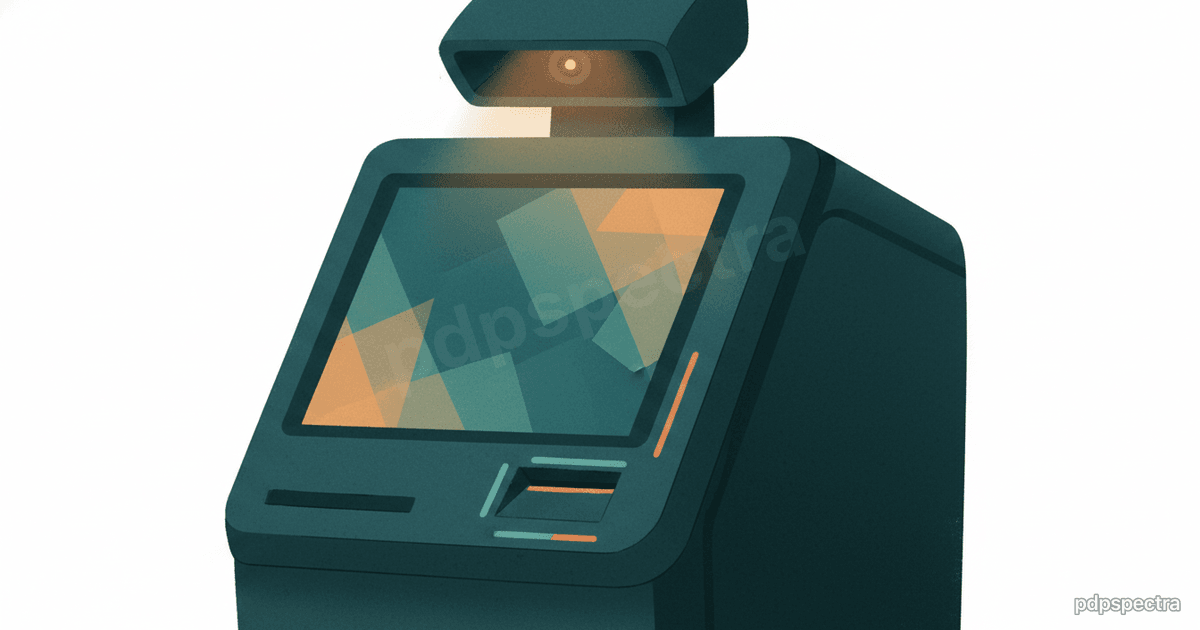
The Everseen advantage is that it doesn’t require new fixtures — it sits on the existing camera feed and the existing POS. The disadvantage is alert fatigue. Early deployments at Walmart generated false-positive rates high enough that store associates started ignoring prompts, and the company spent 2023 and 2024 tuning the false-positive trade-off down. By 2025 the published claim was a meaningful reduction in self-checkout shrink at tuned stores, though the unpublished version is that the result varies enormously by store format, demographic, and how the store responds to alerts.
Veesion and the in-aisle problem#
Veesion (the French startup, recently acquired by Mishipay in late 2025) attacks a different problem: theft that happens before the customer ever reaches the checkout. Cameras already mounted in the aisles get a behaviour-detection overlay — concealment gestures, bag staging, multi-item grabs. The store gets a phone alert with a short video clip; an associate can intercept before checkout.
Veesion’s wedge is that it works on existing IP cameras with no fixture work, sells on a per-camera SaaS model, and produces evidence clips that police actually accept. Carrefour, Casino, Auchan, Spar, and a long tail of European convenience chains are the install base. The US market is the 2025-2026 expansion push, and the Mishipay tie-up adds a frictionless-checkout angle to the loss-prevention story.
Trigo, AiFi, and the autonomous-store vendors#
The autonomous-store category — walk in, take items, walk out, the AI bills you — has consolidated dramatically. Amazon shut down Just Walk Out in most of its first-party stores in 2024, keeping the technology alive primarily as a B2B licensing play to stadiums, airports, and a small number of partner retailers. The closure was a meaningful market signal: the unit economics of Just Walk Out in full grocery formats did not work, and the customer support cost of disputed charges was higher than disclosed.
Trigo (Israeli, partnered with Tesco, REWE, Aldi Nord, Auchan, and Wakefern) survived as the most credible non-Amazon vendor. The Trigo system uses ceiling-mounted RGB cameras and weight-sensitive shelves and works in real grocery footprints up to about 1,500 square metres. Tesco’s GetGo store in central London has been operational since 2021; the REWE Pick & Go format in Germany is the largest commercial deployment.
AiFi (US-based) took a different bet — modular autonomous stores delivered to stadiums, airports, military bases, and university campuses. Lower fidelity than Trigo, much faster deployment, and a clear customer with a measurable problem (low-staff venues with predictable inventory).
Standard AI is the cautionary tale. The San Francisco vendor pivoted from autonomous checkout to broader retail analytics in 2023, laid off most of its staff through 2024, and quietly wound down most of its retail relationships in 2025. The lessons retailers took away: the camera fidelity required for full autonomous checkout in grocery is enormous, the integration with POS and inventory systems is harder than the demo videos suggest, and the customer dispute rate on AI-generated receipts is genuinely high.
The Walmart and Lowe’s pilots#
Walmart’s loss-prevention stack is the most-watched in US retail. The public pieces include Everseen on self-checkout, Sensormatic Solutions for EAS (electronic article surveillance) and entrance analytics, a heavy investment in receipt verification at the door (the greeter is now an AI-augmented role), and selective deployment of AI-driven exit-camera matching against entry video. Walmart’s 2025 disclosure described a measurable shrink improvement attributable to the AI stack, though it stopped short of attributing specific dollar amounts.
Lowe’s piloted a more aggressive store-level computer vision program in 2024 and 2025, with cameras tracking high-shrink categories (power tools, copper wire, appliances) and AI flagging out-of-pattern movement. The internal review was mixed: the technology caught real loss events, but the false-positive rate was high enough to require dedicated reviewer staff, and the cost-per-incident-prevented was close to break-even at year one.

The pattern across the public pilots: AI loss prevention works, but the gain comes from a combination of detection technology, store-process changes (greeter at the door, receipt check at exit, attendant intervention on alert), and tuning over months. Retailers expecting plug-and-play results are uniformly disappointed.
Organized retail crime and the marketplace problem#
The harder loss-prevention problem in 2026 is organized retail crime — coordinated groups stealing inventory for resale on online marketplaces. AI helps on three fronts.
First, in-store detection of organized behaviour — multi-person coordinated theft, repeat offenders detected across stores via biometric or behavioural signatures. The civil liberties tension here is real; California, Illinois, and several EU jurisdictions have constrained facial-recognition use in retail, pushing vendors toward gait analysis and clothing-feature matching instead.
Second, post-event investigation — AI summarisation of hours of camera footage to surface the incident clip an investigator needs. This is where most of the day-to-day analyst time savings actually appear.
Third, marketplace monitoring — AI scanning eBay, Amazon, Facebook Marketplace, and OfferUp for stolen inventory listed for resale. Vendors including Ebbo, Auror (New Zealand-origin), and a handful of US specialists run this for the major chains.
What we recommend retailers deploy in 2026#
For a retailer asking where to start, the sequencing we’ve seen work:
- Computer vision overlay on existing self-checkout before any new fixture investment. Everseen or a regional equivalent, tuned over six months, with a clear plan for what the attendant does on alert.
- In-aisle behavioural detection for stores with high-shrink categories. Veesion or equivalent, with a real evidence-handling process so clips become prosecutions where appropriate.
- Exit verification as a process change supported by AI — receipt-to-cart matching at the door, with AI handling the volume.
- Investigation tooling before any autonomous-store ambition — the post-event AI tooling has the clearest ROI of any loss-prevention AI category.
Autonomous checkout — the Trigo, AiFi, and former Just Walk Out category — is a 2027-and-beyond investment for most retailers. The unit economics work in specific formats (small footprint, predictable inventory, low-staff venues), not in mainstream grocery or general merchandise.
Related reading#
- Computer vision for store shelf operations
- The supply chain visibility platforms post
- The retail personalization playbook
Where pdpspectra fits#
We help retailers stand up the data pipelines and ML platforms behind loss-prevention deployments — POS integration, camera-feed ingestion, alert routing, and the dashboards CFOs ask for when shrink lands in the quarterly disclosure. Our data engineering practice builds the operational layer.
Loss prevention AI works, but only with the process changes around it. If you’re evaluating Everseen, Veesion, Trigo, or building an internal computer vision program, tell us about the stores.