Fusion Energy in 2026: SPARC, Helion, TAE, and the NIF Milestones
Where fusion sits in 2026 — Commonwealth Fusion SPARC progress, Helion + Microsoft 2028 deal, TAE Technologies, Tokamak Energy, ITER delays, and the NIF ignition milestones.

Fusion energy moved from “always thirty years away” to “private companies promising electricity to the grid before 2030” sometime around 2022, and the field has spent the last four years discovering what that timeline really means. The honest 2026 picture is that no commercial fusion plant has produced electricity for the grid, no company is within twelve months of doing so, and the original aggressive milestones have slipped — but the underlying physics, engineering, and capital trajectory all moved meaningfully forward. The question is no longer whether net-energy fusion is physically possible (the 2022 NIF result settled that) but whether the engineering and economics can be made to work on a timeline that matters for the climate transition.
This post walks through the 2026 fusion landscape — Commonwealth Fusion Systems and SPARC, the Helion-Microsoft deal, TAE Technologies, Tokamak Energy, the ITER program, the NIF milestones, and the ARPA-E milestone-based funding regime — and what the next three to five years actually look like.
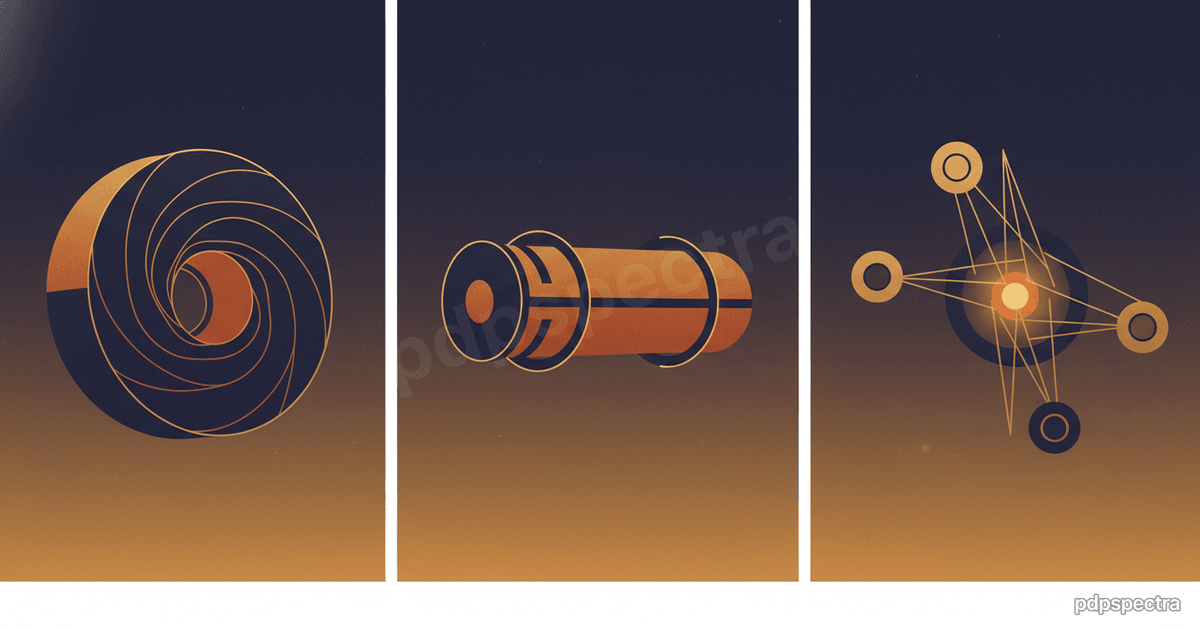
Commonwealth Fusion Systems and SPARC#
Commonwealth Fusion Systems, the MIT spinout founded in 2018, remains the best-resourced and most-watched private fusion company. The core bet is high-temperature superconducting (HTS) magnets — using YBCO tape to build magnets strong enough that a compact tokamak can reach burning-plasma conditions at much smaller size than ITER. SPARC, the demonstration device under construction at the company’s Devens, Massachusetts campus, was originally targeted for first plasma in 2025 with net energy gain in the 2026 to 2027 window.
By 2026 the SPARC timeline has slipped — first plasma is now targeted for 2027 — but the underlying engineering milestones, particularly the HTS magnet demonstrations completed in 2021 and 2024, have held up. The follow-on commercial plant, ARC, is targeted to deliver electricity in the early 2030s, with CFS having signed an off-take agreement with Dominion Energy in Virginia for the first ARC plant. Cumulative capital raised by CFS sits above two billion dollars, which makes it the most-funded private fusion company in the world.
Helion Energy and the Microsoft 2028 deal#
Helion Energy took the fusion deal that defines the commercial-fusion conversation. In May 2023, Helion and Microsoft announced a power-purchase agreement for fifty megawatts of electricity from a Helion fusion plant, targeted to come online by 2028. The contract included financial penalties on Helion for failing to deliver, which Microsoft framed as a real commercial commitment rather than a research grant.
The Helion approach is different from the tokamak path. Helion uses a field-reversed configuration (FRC) with pulsed-magnetic compression and aims at a deuterium-helium-3 fusion reaction (not the more conventional deuterium-tritium of ITER and SPARC) with direct electrical energy conversion from the expanding plasma rather than a steam cycle. The pitch is that direct conversion eliminates the turbine and steam-loop overhead that makes thermal-fusion plants resemble large fission stations, which would dramatically reduce build cost.
The honest assessment in 2026 is that the 2028 timeline is widely viewed as extremely aggressive, including by people sympathetic to Helion’s approach. The most recent Polaris prototype, which Helion has been operating since 2024, demonstrates many but not all of the conditions needed for net-energy operation. Whether Helion delivers in 2028 or some years later, the contract structure with Microsoft has changed how commercial-fusion deals get talked about in the energy industry.
TAE Technologies, Tokamak Energy, and the wider private field#
TAE Technologies, the long-running California company, pursues yet another configuration — an advanced beam-driven FRC aiming at aneutronic fusion using hydrogen-boron-11 fuel. The Norman device has been operating since 2017, the Copernicus follow-on is in construction, and the company has raised over a billion dollars across a long roster of strategic investors including Google, Chevron, and Sumitomo. The TAE roadmap targets net energy by the late 2020s with commercial deployment in the 2030s.
Tokamak Energy in the UK takes a path similar to Commonwealth Fusion — compact spherical tokamaks with HTS magnets — and operates the ST40 prototype in Oxford. The company has government support through the UK STEP program and is targeting commercial deployment in the 2030s.
The wider private-fusion field by 2026 includes well-funded entrants in inertial confinement (Focused Energy, Marvel Fusion, Xcimer Energy), magnetised target fusion (General Fusion in Canada, with persistent timeline slips), stellarator approaches (Type One Energy, Renaissance Fusion in France), and a long tail of earlier-stage startups. The Fusion Industry Association counted around forty private fusion companies globally by mid-2025, with cumulative private investment well above seven billion dollars.
ITER and the public-sector path#
ITER, the international tokamak under construction in Cadarache, France, remains the largest fusion project in human history and continues to slip. The 2024 announcement formally delayed first plasma from 2025 to 2034, with full deuterium-tritium operation pushed to 2039. The cost has continued to grow, and the project’s reputation as the cautionary tale of public-sector megaproject management has continued to harden. The honest reading is that ITER will eventually demonstrate the burning-plasma physics it was designed to demonstrate, but it will do so on a timeline that has been overtaken by the private-sector compact-tokamak path that Commonwealth Fusion and Tokamak Energy represent.

The NIF ignition milestones#
The National Ignition Facility at Lawrence Livermore National Laboratory produced the moment that recalibrated the field. In December 2022, NIF achieved scientific ignition — more fusion energy output than the energy in the laser pulse that initiated the reaction — for the first time in history. The result was reproduced in July 2023, October 2023, and again in 2024 with higher yields. The most recent NIF runs have reached gain values significantly above one, with the 2024 high-water-mark producing several megajoules of fusion energy from a roughly two-megajoule laser pulse.
The NIF results matter for two reasons. First, they prove the underlying physics — net-energy fusion in the lab is no longer a theoretical question. Second, they have re-energised the inertial-confinement private companies (Focused Energy, Marvel Fusion, Xcimer) that aim at making the NIF-style approach commercially viable, where the bottleneck is not physics but the engineering of high-repetition-rate laser drivers and target fabrication at industrial scale.
ARPA-E milestone funding and the US public-sector role#
The US Department of Energy through ARPA-E and the broader Fusion Energy Sciences program has shifted its private-fusion engagement toward milestone-based funding. The Milestone-Based Fusion Development Program announced in 2023 awarded grants to eight companies — including Commonwealth Fusion, Tokamak Energy, Focused Energy, Realta Fusion, Princeton Stellarators, Type One Energy, Xcimer, and Zap Energy — with payment tied to hitting specific technical milestones. The structure mirrors how NASA’s COTS and Commercial Crew programs accelerated private space launch.
The 2025 follow-on rounds expanded the program and added a second tier of awards for companies further along the development curve. The federal commitment to commercial fusion in the US is now a recognisable analogue of the federal commitment to commercial space launch in the early 2010s.
What this means for buyers and grid planners#
For utility planners, datacentre developers, and corporate buyers thinking about long-term clean energy, the practical 2026 picture is that fusion is genuinely arriving as a credible category for the 2030s, not the 2020s. The hyperscaler PPAs — the Microsoft-Helion deal, the rumoured ongoing conversations between other cloud providers and private fusion companies — are structuring the early commercial demand. Utility off-take agreements like CFS-Dominion are structuring the second wave. The combination of plummeting renewable costs, growing nuclear-SMR build, and the slow arrival of fusion is the realistic shape of the deep-decarbonised grid through the 2030s.
Where pdpspectra fits#
Our data-engineering practice builds the high-throughput data and simulation infrastructure that fusion R&D programs and grid-integration planners need for plasma diagnostics, modelling, and PPA scenario work.
Related reading: the nuclear SMR 2026 post, the AI energy utilities post, and the energy grid optimization post.
Fusion is no longer thirty years away; it is five-to-fifteen years away, with real capital and real off-take contracts behind it. Talk to our team about your deep-tech data program.