Industrial Robotics in 2026: FANUC, ABB, KUKA, and the AI Shift
FANUC, ABB, KUKA, Yaskawa, Universal Robots, Kawasaki — the industrial robot incumbents in 2026. Plus NVIDIA Isaac, Skild AI, Physical Intelligence, and the foundation-model shift in motion planning.

Industrial robotics in 2026 looks superficially like industrial robotics in 2016: FANUC, ABB, KUKA, and Yaskawa still dominate global installations, Universal Robots still owns the collaborative-robot category, and the high-volume automotive and electronics customers still drive the demand curve. The change underneath is the software layer. AI motion planning, generalist policy models, and NVIDIA’s Isaac platform are quietly rebuilding what a “robot program” actually is.
This is the lay of the land in 2026 — the incumbents, the cobot story, the AI shift, and how to think about it if you’re sizing a plant automation roadmap.
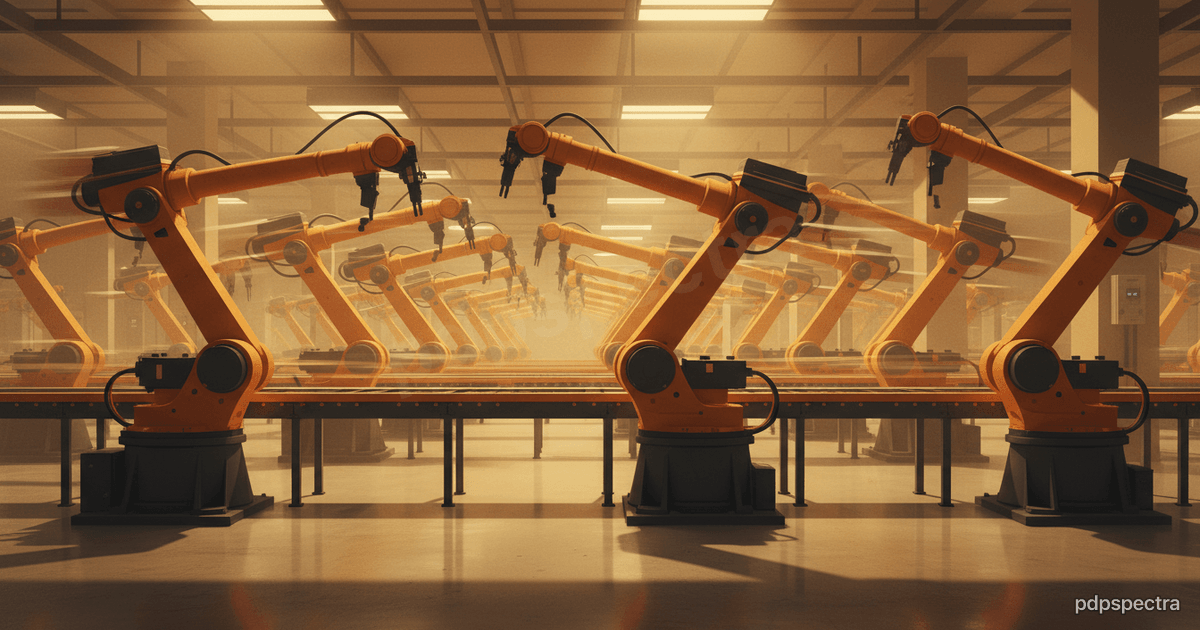
The big four: FANUC, ABB, KUKA, Yaskawa#
Global industrial robot shipments cleared 600,000 units annually in 2024 according to IFR data, and the big four still account for the majority. Each has a distinct posture.
FANUC (Japan) is the volume leader. Yellow robots are the default in automotive paint, weld, and material-handling globally. FANUC’s strength is reliability and the FANUC Field service network — you can get a part anywhere in the world within 24 hours. Their AI story is the FIELD system for analytics on robot fleets and a steady push into vision-guided pick-and-place. Conservative on the foundation-model front.
ABB (Switzerland/Sweden) split off its robotics-and-discrete-automation business but the brand remains. ABB has been more aggressive than FANUC on AI; the OmniCore controller family launched in 2023-2024 is built around modern compute, and ABB has multiple partnerships with NVIDIA on Isaac integration. ABB’s YuMi cobot established the dual-arm collaborative category.
KUKA (Germany, owned by Midea since 2016) is the European automotive default. Strong in body-in-white welding and high-payload work. KUKA’s iiwa cobot was a serious early entrant. Under Midea ownership, KUKA has leaned harder into Chinese-market growth.
Yaskawa (Japan) makes the Motoman line. Particularly strong in arc welding and electronics assembly. Yaskawa’s MotoSight vision system and the steady pace of new model releases keep them competitive without dramatic moves.
Universal Robots and the cobot category#
Universal Robots, the Danish company owned by Teradyne, defined the collaborative-robot category and still dominates it. The UR3e / UR5e / UR10e / UR16e / UR20 / UR30 lineup covers payloads from 3kg to 30kg, all operable next to humans without safety cages. Programming is taught by physical demonstration — you grab the arm and guide it through the motion — which collapsed the deployment cost for small and mid-sized manufacturers.
UR’s market in 2026 is broader than the big four’s: thousands of small plants doing CNC tending, palletizing, lab automation, and food handling. The cobot crossed 100,000 cumulative units shipped by 2023 and is still growing faster than traditional industrial robots in unit terms.
Competitors in the cobot space: Techman Robot (Taiwan, Quanta Computer subsidiary), Doosan Robotics (Korea), Fanuc CRX (the yellow giant’s cobot line), AUBO, JAKA, and the steady wave of Chinese entrants.
Kawasaki and the second tier#
Kawasaki Robotics, Mitsubishi Electric, Stäubli, Comau, Epson, Denso, and Omron occupy the next tier. Each is strong in specific segments — Kawasaki in painting, Stäubli in pharma cleanrooms, Denso in electronics assembly, Comau in automotive body-in-white. These are not commodity vendors; in their specialties they’re often the right choice over the big four.
The Chinese tier (Estun, Inovance, Siasun, Efort) is also material. Estun acquired Cloos for welding capability; Inovance grew rapidly on the domestic Chinese market. By 2026 these are real competitors on price and increasingly on capability, especially within China.
The cobots-vs-traditional divide#
The 2026 question for many plants isn’t “which robot brand?” — it’s “cobot or traditional industrial?” The honest framing:
Traditional industrial robots (FANUC, ABB, KUKA, Yaskawa, Kawasaki at full payload) make sense when you have high-volume repetitive work, fixed cells, and engineered safety. They’re faster, stronger, more precise at the high end, and the supplier ecosystem is mature.
Cobots (Universal Robots, Techman, Doosan, FANUC CRX) make sense when you have variable production, smaller batches, frequent reprogramming needs, or space constraints that don’t allow fenced cells. They’re slower and lower-payload, but the total deployment cost (including safety engineering, footprint, and reprogramming) is dramatically lower.
Many plants in 2026 are running both. The traditional robots handle the high-volume backbones; cobots fill in the variable-product and assist-the-human work. The dual-deployment pattern is the norm for mid-size and large factories.
NVIDIA Isaac and the simulation-first stack#
The most consequential shift in 2026 robotics isn’t any particular robot — it’s NVIDIA’s Isaac platform. Isaac Sim (high-fidelity physics simulation), Isaac Lab (RL training environment), Isaac ROS (perception stack), and Isaac Manipulator (foundation-model-based manipulation) collectively give roboticists a unified development environment.
The pattern: train policies in Isaac Sim on synthetic data, transfer to real hardware, fine-tune on real-world data. Sim-to-real has gone from research curiosity to standard practice. The big four are increasingly building on top of Isaac rather than building their own simulators.
NVIDIA also announced Isaac GR00T, the generalist foundation model for humanoid robotics, and Cosmos, a foundation model for physical-AI world models. These are platform plays — NVIDIA wants to be the AI substrate for the whole industry the way it became the AI substrate for LLMs.
Generalist policy models: Skild, Physical Intelligence#
A new layer is emerging that isn’t owned by any robot maker: generalist policy models that work across robot platforms.
Skild AI, founded by former CMU robotics researchers, raised at a $1.5B valuation in 2024 to build a “general intelligence” for robots — a foundation model that generalises across robot embodiments and tasks. The technical bet is similar to GPT’s: enough scale and diverse demonstration data produces emergent generalisation.
Physical Intelligence (pi), founded by Sergey Levine and Karol Hausman among others, raised $400M in 2024 on a similar thesis. Public demos in 2024-2025 showed pi-0, their foundation model, controlling multiple robot platforms on tasks like folding laundry and packing boxes.
The implications if these companies succeed: the robot maker becomes more like a hardware OEM, and the policy model becomes the value layer. That’s a meaningful shift in industry economics, comparable to what happened to PC makers when Windows became the platform.
AI motion planning: what it actually changes#
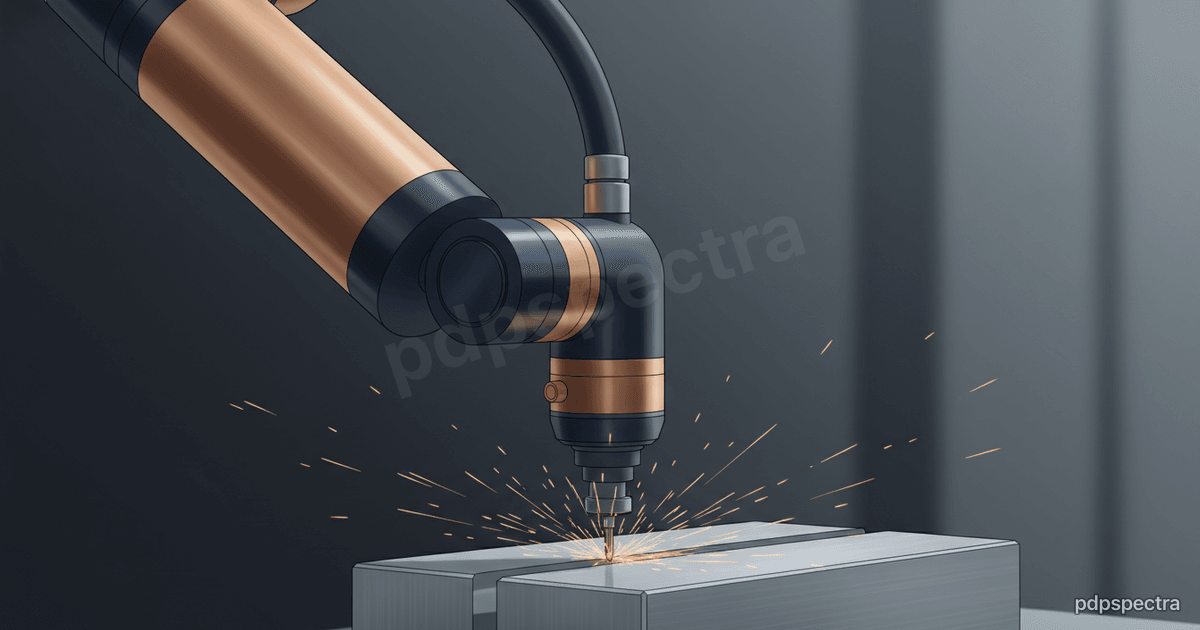
Concretely, AI motion planning changes a few things in plant deployment:
- Faster path planning — RL-trained planners produce optimised trajectories faster than analytical solvers for complex bin-picking
- Better grasping on novel objects — vision-language models that can grasp unfamiliar parts without re-engineering
- Easier reprogramming — natural-language instructions or demonstration-based teaching reduce the engineer-hours per task
- More robust failure recovery — policies that adapt when conditions drift, rather than halting
None of this replaces the existing motion-planning literature. It complements it. The 2026 production stack typically uses classical planners for safety-critical primitives and AI for the harder generalisation cases.
What we tell clients#
Most factories we work with don’t need to switch robot brands. They need to think about three things:
- Data capture — every robot, every PLC, every quality station should be producing data that feeds the plant data lake. Without that, AI improvements have nothing to learn from.
- Integration with MES and ERP — robots that don’t talk to manufacturing execution and enterprise resource planning are isolated tools, not part of the production system.
- AI motion planning as augmentation, not replacement — start with the existing robots and add AI vision / planning where it pays back, rather than rip-and-replace.
Our business automation work covers the plant-data integration that sits underneath all of this. The robot is the visible part; the data spine is what makes it part of the operation.
The 2026 picture#
The industrial robotics industry in 2026 is mature on hardware, evolving fast on software, and starting a meaningful transition toward foundation-model-based motion planning. The big four still dominate, cobots still grow faster in unit terms, NVIDIA is becoming the platform layer, and generalist policy startups are the wildcards that could reshape the industry over the next 3-5 years.
For plant operators in 2026, the practical posture is: stick with the proven hardware vendors, invest in the data and integration layer, pilot one or two AI-motion-planning use cases (especially bin-picking or quality inspection), and watch the foundation-model space closely.
Related reading#
- Humanoid robots: Figure, Tesla, 1X, and the foundation-model layer
- Japan robotics industry: precision, aging workforce, AI inflection
- Surgical robotics in 2026: da Vinci 5, Hugo, Ottava, and Mako
Industrial robotics in 2026 is still a hardware industry with an increasingly software-defined future. If you’re sizing a plant automation roadmap that has to span robots, MES, ERP, and your data platform, our business automation team builds the integration spine. Tell us about the plant.