Lab Automation and Robotics in 2026: Emerald Cloud Lab, Strateos, Opentrons, the A-Lab at LBNL, and Self-Driving Labs
Emerald Cloud Lab, Strateos, Opentrons, Andrew Alliance, Hamilton, Tecan, the A-Lab at LBNL, self-driving materials labs, and what robotic high-throughput screening looks like in 2026.

The lab-automation story in 2026 has stopped being a curiosity and become operational reality for serious biotech and materials-science organizations. The two converging trends — cloud labs that let outside scientists run physical experiments via API, and self-driving labs that close the loop between ML models and benchtop chemistry — moved past their hype cycles into measurable scientific output. A-Lab at Lawrence Berkeley National Laboratory published peer-reviewed results in late 2023 on autonomous materials discovery. Emerald Cloud Lab opened its second commercial facility. Opentrons scaled into the academic and small-biotech mainstream. The vendor landscape is consolidating around a few dominant patterns.
This post is the engineer-friendly tour of the platforms, what they do well, and how production teams are actually using them.
The categories that matter#
Three categories of automation hardware and software are converging in 2026.
Liquid handlers and integrated workstations. Hamilton STAR/Vantage, Tecan Fluent/Freedom EVO, Beckman Biomek, Eppendorf epMotion, Opentrons. These are the workhorses of every modern wet lab — pipetting, sample preparation, plate reformatting. The Opentrons platform — open-source firmware, Python-based protocols, much lower per-unit cost — disrupted the academic and small-biotech market through 2020-2024 and is now the default for many small operations.
Modular robotic platforms. Andrew Alliance (acquired by Waters in 2020), Highres Biosolutions, Peak Analysis & Automation, the integrated robotic islands that combine liquid handlers, plate readers, incubators, and storage with a robotic arm tying them together. The Hamilton and Tecan integrated systems compete on this terrain too.
Cloud labs. Emerald Cloud Lab, Strateos (the merged Transcriptic-3Scan), Arctoris in the UK. Outsourced, fully-automated labs that scientists access via API or web interface. You write the protocol, the lab executes it, the data comes back.
The fourth category — fully autonomous self-driving labs that close the loop with ML — is still mostly research-stage but with credible production wins.
Emerald Cloud Lab and the API-first lab#
Emerald Cloud Lab is the most ambitious commercial cloud-lab operator. The facility in Austin (and the original in South San Francisco) operates thousands of pieces of equipment as a unified compute fabric — liquid handlers, mass spectrometers, plate readers, NMR, HPLC, flow cytometry, chromatography, microscopy. Users write protocols in a Mathematica-derived domain language called the Symbolic Lab Language, the platform schedules and executes the experiment, and structured data flows back into the user’s notebook.
The 2024-2025 commercial wins include several large-pharma partnerships and a handful of well-funded biotechs running their entire wet-lab program through Emerald rather than building their own facility. The pitch is real: building and operating a wet lab at biotech-startup scale is millions of dollars per year in capex and operating cost, and most of that capacity sits idle most of the time. Emerald amortizes the capital across many users.
The honest limitations: Emerald’s catalog of available assays and instruments is large but not infinite, the queue times for popular instruments can be days, and the SLL learning curve is real. Power users love it; teams that need bespoke fixtures or unusual instruments cannot use it for everything.
Strateos and the merger consolidation#
Strateos — the result of the Transcriptic and 3Scan merger — runs a similar API-first cloud-lab model with emphasis on biology workflows (cell-based assays, automated tissue culture) more than chemistry. Strateos’s partnerships with Eli Lilly, Bayer, and other pharma have been the commercial backbone. The 2024-2025 work focused on closing the gap with Emerald on chemistry assay coverage and on running multi-step biology workflows that previously required a human in the loop for sample handoffs.
The Strateos and Emerald combined view of the cloud-lab market in 2026 is that the model is now operationally proven — large pharma has integrated cloud-lab usage into program plans, smaller biotechs are choosing it over building wet labs, and the friction points are now about queue economics and assay coverage rather than whether the model works.
Opentrons and the academic and small-biotech tier#
Opentrons changed the economics of academic lab automation by selling a capable pipetting robot at low five figures rather than mid six figures. By 2024-2025 the OT-2 and the newer Flex platforms shipped to tens of thousands of labs worldwide. The Python protocol language, the open-source firmware, and the active community made Opentrons the default automation entry point for most academic labs and many small biotechs.
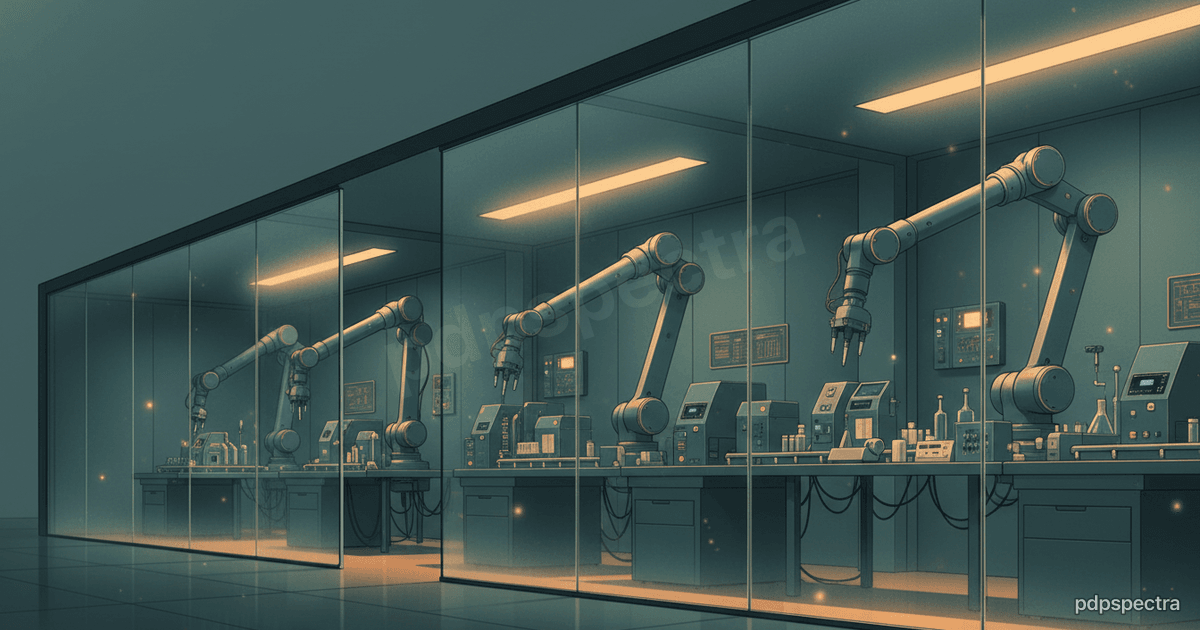
The Opentrons trade-off is real — the throughput per unit is well below a Hamilton STAR, the reliability under heavy 24/7 use is lower, and certain very precise pipetting steps need higher-end hardware. For teams running a few hundred assays a week, Opentrons works fine. For teams running tens of thousands a day, the integrated Hamilton or Tecan platforms are still the right tool.
Andrew Alliance, Hamilton, Tecan, and the mid-tier consolidation#
The mid-tier automation platforms — Andrew Alliance (Waters), Hamilton, Tecan, Beckman, Eppendorf — have been competing on integration and software more than on hardware specs through 2023-2026. The Hamilton Venus software, the Tecan Fluent Control, and the Andrew Alliance OneLab cloud platform all aim at the same use case: a biologist who wants to design a multi-step protocol, run it overnight, and get back to analysis without spending a week troubleshooting the deck layout.
The 2024-2025 trend that platform teams should track is the integration of these workstations with electronic lab notebooks (Benchling, LabArchives, SciNote) and LIMS systems (LabWare, STARLIMS, the open-source Sapio Sciences platform). When the protocol moves from notebook to workstation to LIMS without manual translation, the throughput compounds. When it does not, automation becomes a different shape of bottleneck.
A-Lab at LBNL and self-driving labs#
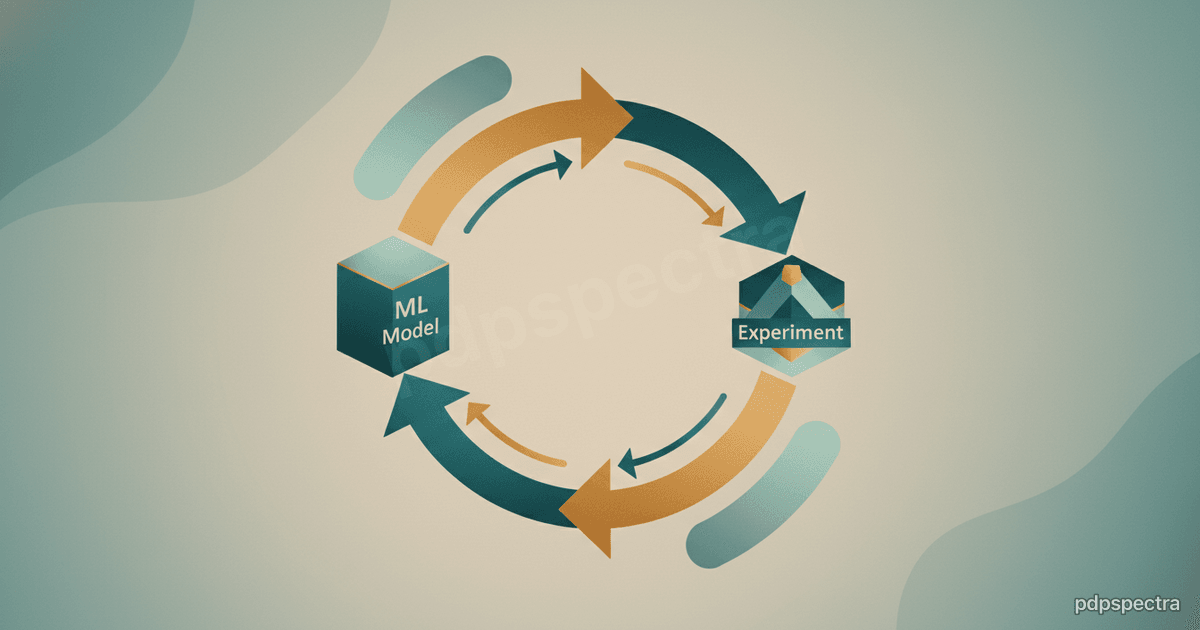
The A-Lab at Lawrence Berkeley National Laboratory was the cleanest published demonstration of a self-driving materials lab to date. The November 2023 Nature paper described a closed-loop system that synthesized novel inorganic materials autonomously: an ML model proposed candidate compositions, the lab synthesized them (precursor handling, mixing, furnace runs, characterization), and the results fed back into the next round of proposals. The seventeen-day campaign reported synthesized 41 novel target compounds out of 58 attempts, with no human intervention in the synthesis loop.
The follow-up criticism — that some of the produced materials were not strictly novel under stricter definitions — was a real debate but did not undermine the core demonstration: a closed-loop autonomous materials lab can run for seventeen days without a human in the synthesis loop. That is a different shape of scientific instrument.
Related self-driving lab work through 2024-2025 came from the Aspuru-Guzik group at Toronto on photochemistry, from Acceleration Consortium broader programs, and from a handful of biotech self-driving programs (Insitro and a few others, mostly not publicly described). The infrastructure that all of these share — robotic synthesis hardware, online characterization, an ML model that proposes next experiments, an orchestration layer that schedules everything — is recognizable to any platform engineer.
High-throughput screening at production scale#
Robotic high-throughput screening — running hundreds of thousands of compounds against a target in a campaign — is the most mature corner of lab automation and has been industrial for decades. The 2024-2026 changes are quantitative rather than qualitative. The integrated Hamilton-and-Tecan deployments at top-tier pharma run continuous campaigns at scales that older facilities could not. Phenotypic screening with cell-painting (Recursion’s approach) generates many terabytes of image data weekly that feed directly into ML models. Acoustic dispensing (Labcyte Echo, now owned by Beckman Coulter) made dispensing nanoliter volumes routine.
The data platform underneath all of this is where most of the engineering pain lives. A modern HTS facility generates raw image data, metadata, quality control checks, plate maps, compound annotations, and assay readouts that all need to land in a unified data lake within minutes of an experiment finishing. The teams that get this right run experiments faster than the teams that do not by margins that are large enough to matter at portfolio scale.
What this means for platform teams#
For technology and data teams supporting biotech or pharma operations in 2026, the lab-automation question is mostly a data and integration question rather than a hardware procurement question. The instruments are there; the software glue that turns instrument output into decision-quality data is what teams are mostly building. We have helped operators wire up data engineering pipelines that move plate maps, raw assay output, image data, and metadata from heterogeneous instrument vendors into unified analytics surfaces. The pattern is similar across cloud-lab and on-premise operations — the contract is “structured data, time-stamped, with full provenance, available in the analytics warehouse within minutes.”
The cloud-lab versus owned-facility decision for most biotechs is now mostly an economic and timing question. Cloud labs work well for early-stage chemistry and biology programs; owned facilities make sense as scale and assay specificity grow. Either way the data layer is the durable investment.
Related reading#
Lab automation is operational reality and the data plumbing is where the value compounds. If your organization needs the integration layer between cloud-lab APIs, on-premise instruments, and analytics, our data engineering team has built this kind of pipeline. Tell us about your platform.