Neuromorphic Computing in 2026: Brain-Inspired Silicon
Spiking neural networks and event-driven silicon are real. Where neuromorphic chips like Loihi 2 and NorthPole win — and where they don't.

For two decades “brain-inspired computing” was a phrase that lived in research papers and venture decks more than in production. That has shifted. In 2026 there is real silicon you can program, real benchmark numbers, and a clearer story about where event-driven compute pays off. There is also a lot of hype to cut through. This post is an engineer’s read on neuromorphic hardware: what it actually is, what the leading chips do, and where it belongs in a deployment.
What “neuromorphic” actually means#
The label gets stretched to cover anything vaguely brain-shaped, so pin it down. Neuromorphic computing has two defining properties. First, it is event-driven: neurons communicate with discrete spikes, and a neuron does work only when it receives or emits a spike. Idle neurons consume almost nothing. Second, memory and compute are co-located: synaptic weights sit next to the neurons that use them, so you avoid the constant shuttle of data across a memory bus that dominates energy on conventional accelerators.
Contrast that with a GPU running a dense neural network. Every layer multiplies every input by every weight on every forward pass, whether or not the activation matters. The von Neumann bottleneck — moving weights and activations between DRAM and the compute units — burns most of the power. Neuromorphic architectures attack both problems at once: they skip the zeros and they keep the data local.
The software counterpart is the spiking neural network (SNN). Instead of a continuous activation, a spiking neuron integrates incoming current over time and fires a spike when it crosses a threshold. Information lives in the timing and rate of spikes, not in a dense floating-point tensor. This is a genuinely different programming model, and that difference is both the opportunity and the obstacle.
The two architectures worth knowing#
Intel Loihi 2#
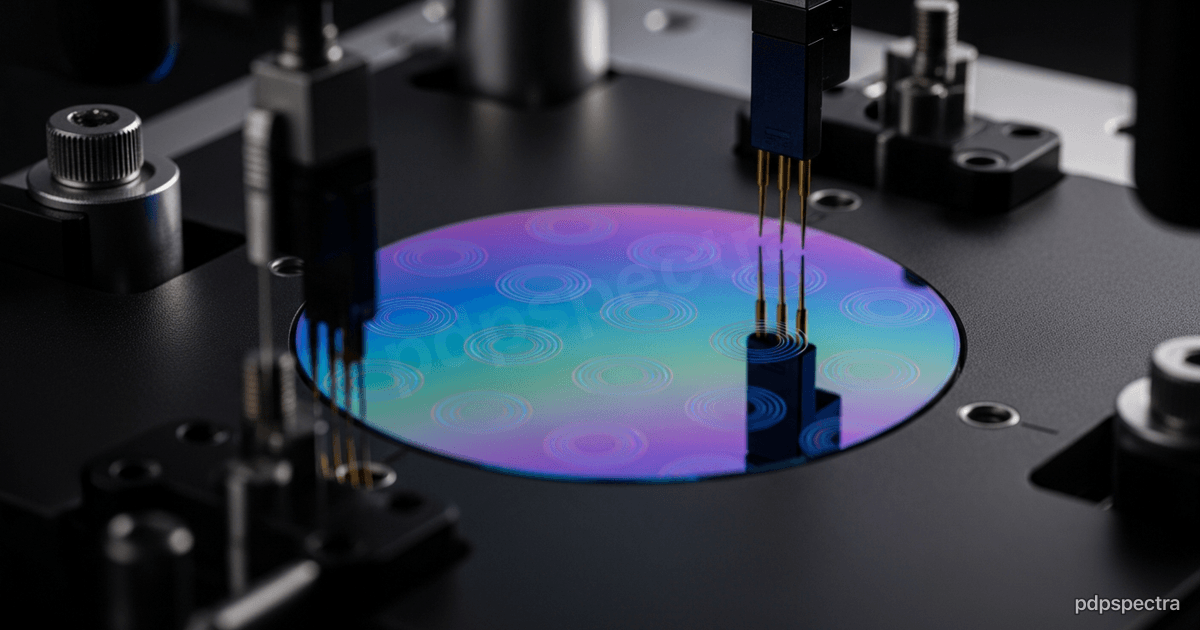
Loihi 2 is the most programmable neuromorphic part available to researchers. Each chip integrates up to 128 asynchronous neuromorphic cores, with each core hosting thousands of programmable neurons and on the order of a hundred thousand-plus synapses. Crucially, the neuron model is not fixed in hardware — compartments are programmable state machines, so you can run leaky integrate-and-fire, resonator dynamics, or your own update rule via microcode. Typical chip power sits around a watt. Intel’s Loihi 2 documentation lays out the core architecture.
Intel’s larger play is Hala Point, a research system that packs 1,152 Loihi 2 processors into a six-rack-unit chassis roughly the size of a microwave oven. Per Intel’s own announcement, it supports up to 1.15 billion neurons and 128 billion synapses while drawing a maximum of 2,600 watts. That neuron count is in the range of an owl brain — interesting, but a reminder that biological scale is still distant. The honest framing from Intel is that Hala Point is a research vehicle for studying efficiency, not a product you deploy.
There is also serious work on pushing SNNs toward language workloads. A 2025 paper on neuromorphic principles for efficient LLMs on Loihi 2 explores how state-space and sparse-activation models map onto the hardware. The results are early; this is not a drop-in transformer accelerator.
IBM NorthPole#
NorthPole comes at the problem from a different angle, and it is arguably the more deployment-relevant of the two. It is a digital inference chip — not a spiking one — that borrows the neuromorphic idea of fusing memory and compute. A 12nm NorthPole part holds 22 billion transistors, a 256-core array, and 192MB of distributed on-chip SRAM, eliminating off-chip memory entirely. From the outside it looks like an active memory chip. IBM’s research writeup and the Science paper document the design.
The numbers are the headline. At low precision NorthPole computes over 200 TOPS at 8-bit, with higher throughput at 4-bit and 2-bit. On a 3-billion-parameter model IBM reports it ran inference roughly 47 times faster than the next most energy-efficient GPU and at about 73 times higher energy efficiency than the lowest-latency GPU. Those comparisons are against a specific GPU generation and specific models — read them as “near-memory digital design removes the bottleneck,” not as a universal multiplier you will see on your workload.
The catch with NorthPole is the flip side of its strength: all weights live in on-chip SRAM, so model size is capped by what fits. A 3B-parameter model needs multiple chips. That is a real constraint for anyone eyeing large generative models.
Reading the benchmarks honestly#
Neuromorphic marketing leans on two kinds of numbers, and they require different skepticism.
The first is biological scale — neuron and synapse counts. Hala Point’s 1.15 billion neurons sounds enormous until you remember a mouse brain has roughly 70 million and a human cortex has tens of billions of neurons with thousands of synapses each. Neuron count is a capacity figure, not a capability figure; it tells you how big a network fits, not how useful the result is. Treat it as you would a transistor count: necessary context, not a performance claim.
The second is energy efficiency, usually quoted as energy per inference or per synaptic operation versus a GPU. These are the numbers that matter, but they are only meaningful with the workload pinned down. Neuromorphic efficiency advantages are largest on sparse, event-driven inputs and shrink toward parity on dense ones, because the whole advantage comes from skipping work that is not there to skip. A figure measured on an event-camera gesture task does not transfer to a dense batched matmul. When a vendor quotes an efficiency multiple, the first question is always “on what workload, against which baseline part.” If they cannot answer crisply, the number is decoration.
The third trap is conversion accuracy. Most reported SNN accuracies come from converting a trained conventional network to spikes, and conversion almost always loses something. A benchmark that quotes the original network’s accuracy, not the converted SNN’s, is quietly misleading. Ask for the post-conversion number on the actual hardware.
Where neuromorphic wins#
Be specific about the niches, because that is where the engineering decision lives.
Sparse, always-on sensing. The canonical fit is an event camera (a dynamic vision sensor) feeding an SNN. The sensor only emits events when pixels change, the network only computes on those events, and the whole pipeline can idle at microwatts between events. For an always-on gesture detector, keyword spotter, or anomaly trigger, this is a different power envelope than polling a frame buffer through a CNN.
Low-latency, low-power edge inference. When the constraint is a battery and a thermal budget rather than peak throughput, event-driven compute is compelling. Drones, hearing aids, industrial vibration monitors, and remote sensors all live in the regime where below 1W matters more than 200 TOPS.
Temporal and adaptive workloads. SNNs natively encode time. Tasks with inherent temporal structure — spike-based audio, closed-loop control, certain optimization problems — map more naturally onto neuromorphic dynamics than onto a stateless feedforward pass.
Where it doesn’t#
The failures are just as important, and most teams overestimate the fit.
Dense, high-throughput training. Neuromorphic hardware is an inference and research story, not a training one. You are not going to pre-train a foundation model on Loihi. Backpropagation through spikes is awkward; the dominant practice is to train a conventional network and convert it to an SNN, which leaves accuracy on the table.
Anything that needs the full model in memory. NorthPole’s SRAM ceiling and Loihi’s per-core synapse limits mean large language and large vision models do not fit cleanly. If your workload is a 70B-parameter LLM, this is the wrong aisle of the hardware store.
The tooling tax. This is the quiet killer. The PyTorch-to-GPU path is paved; the SNN path is gravel. Frameworks like Lava (Loihi) and the broader spiking ecosystem are improving but still demand specialist knowledge, custom training loops, and accuracy recovery work. For most enterprise teams the integration cost outweighs the energy savings unless the power constraint is genuinely binding.
How to think about it in a real deployment#
The practical question is rarely “should we go neuromorphic.” It is “is there a sparse, power-constrained, always-on component in our system where event-driven compute changes the design.” If yes, prototype it in isolation. If no, conventional accelerators with good quantization will serve you better and cost far less engineering.
In the AI implementation work we do, the pattern that holds up is hybrid: a neuromorphic or near-memory front end handles the cheap, always-on detection, and wakes a conventional accelerator only when something interesting happens. That keeps the average power low without betting the whole pipeline on an immature toolchain. The same architectural instinct shows up when we wire low-power edge triggers into a Hospital Management System for continuous patient monitoring, or into Operational Automation for predictive maintenance on a factory line — the sensor edge stays sparse and frugal, the heavy lifting moves to where the tooling is mature.
Neuromorphic computing in 2026 is past the vaporware stage and short of the revolution its loudest advocates promise. Treat it as a sharp tool for a specific class of problems — sparse, temporal, power-bound — and it earns its place. Treat it as a GPU replacement and it will disappoint you.
Building a power-constrained edge pipeline and not sure event-driven silicon is worth the tooling cost? We size the tradeoff before you commit. Talk to our architecture team.