AI Impact on Czech Republic Jobs and Industries in 2026
How AI is reshaping Czechia in 2026 — Avast, JetBrains Prague, Skoda Auto AI, Productboard, Brno research, manufacturing and cybersecurity engineering jobs.

The Czech Republic enters 2026 as one of the most quietly successful tech economies in central Europe. Czechia’s IT services exports passed 9 billion euros in 2025, the unemployment rate remains among the lowest in the EU at roughly 3 percent, and the country sits in the upper third of the European Innovation Scoreboard. The national AI strategy was refreshed in 2024 and the Ministry of Industry and Trade now coordinates a 600 million Czech koruna AI factory bid centred in Ostrava with IT4Innovations and the Karolina supercomputer. The dominant industrial fact remains Skoda Auto and the wider Volkswagen Group footprint, which produces roughly a tenth of Czech GDP and is now spending serious money on AI-driven production engineering. Layered on top is a remarkably strong cybersecurity and developer tools heritage that traces back to Avast, Eset’s Brno satellite, JetBrains and AVG.
Sector-by-sector impact#
The Czech economy is more industrial than the EU average, with manufacturing close to 30 percent of GDP. AI is showing up unevenly but is most visible in three places — automotive, cybersecurity software, and the international shared service centres that anchor Prague and Brno.
Automotive and advanced manufacturing#
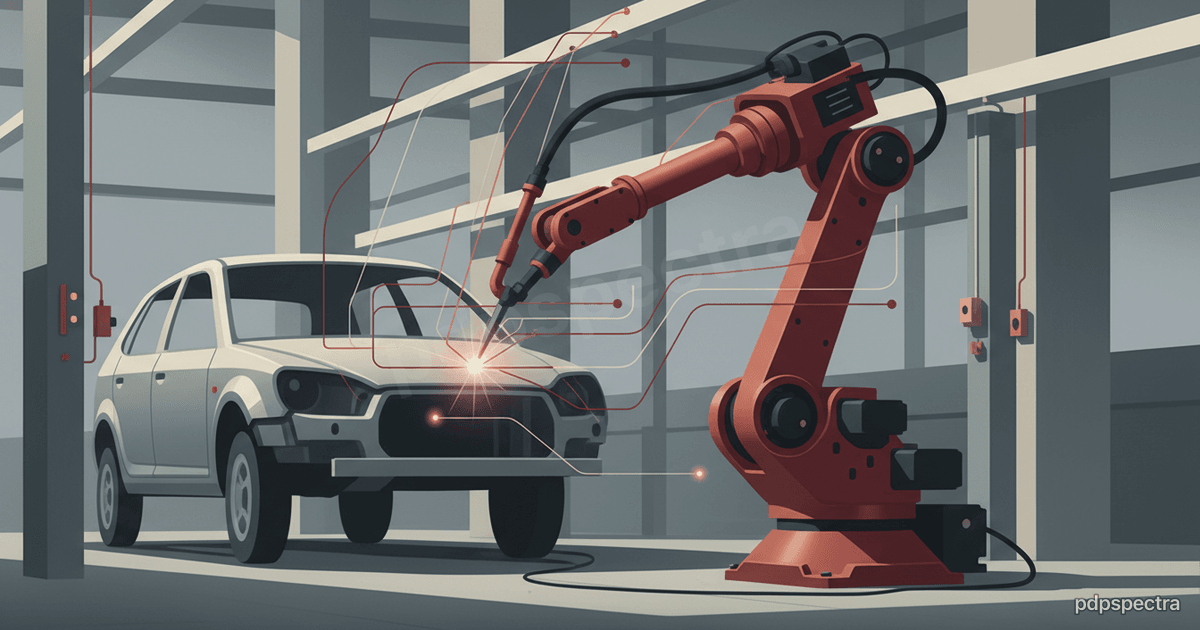
Skoda Auto’s plants in Mlada Boleslav, Kvasiny and Vrchlabi run computer vision quality inspection across stamping, body shop and final assembly. Predictive maintenance on press lines and paint booths has reduced unplanned downtime measurably since 2023. The wider Volkswagen Group software stack, including Cariad work shared with Prague engineering teams, has filtered into Czech jobs in unexpected ways — process engineers now write Python and Skoda’s MES platform team has tripled in size. Continental, Bosch and Brose all run significant Czech R and D centres focused on advanced driver assistance and EV powertrain control.
Cybersecurity and developer tools#
Avast merged with NortonLifeLock to form Gen Digital in 2022 and still anchors a large Prague engineering footprint working on consumer security and identity. Eset’s Bratislava headquarters runs research operations in Brno. JetBrains operates its main R and D centre out of Prague after relocating significant headcount from Saint Petersburg, and the company’s AI coding assistant ships out of those teams. Productboard, the product management platform founded by Hubert Palan, runs its largest engineering team in Prague and embeds generative AI for customer feedback synthesis. These companies have created a senior engineering labour market that pays at western European levels for the right specialisations.
Shared services and business process#
Prague hosts more than 250 shared service centres run by global firms — DHL, Honeywell, ExxonMobil, Accenture, IBM, MSD and ABB among them. AI is showing up here as ticket triage automation, finance copilots for invoice processing and code copilots for the engineering tasks that have moved east. The headcount profile is shifting from junior bilingual support staff to smaller senior teams.
Banking and financial services#
CSOB, Komercni Banka, Ceska Sporitelna and Air Bank have rolled out fraud detection and onboarding automation. The Czech National Bank’s regulatory stance has been pragmatic and aligned with the EU AI Act, which has helped institutions move from pilots to production. Twisto and Mall Group remain the consumer fintech reference points.
Energy and utilities#
CEZ Group runs computer vision for transmission line inspection and predictive maintenance on its nuclear and coal generation fleet, and is investing in AI for the Dukovany expansion programme. The Prague Public Transport Company uses passenger flow analytics across the tram and metro network.
Job categories growing and shrinking#
The fastest-growing roles in Czechia are senior machine learning engineers commanding 110,000 to 180,000 Czech koruna per month gross in Prague, manufacturing data engineers tied to the Skoda and Bosch ecosystems, cybersecurity researchers and cloud platform engineers. Demand for developer tools and IDE engineers remains hot thanks to JetBrains and the broader product company cluster.
The roles under pressure are bilingual junior support staff at shared service centres, template-heavy legal and translation roles, and entry-level finance positions inside the same SSC market. The Czech vocational system is responding slowly, and the gap between Prague salaries and Moravian regional salaries is widening rather than narrowing.
Geographic distribution#
Prague is the corporate AI capital — Karlin and Andel concentrate product companies, while Stodulky and Holesovice host multinational SSCs. Brno is the technical counterweight, with Masaryk University, Brno University of Technology, Red Hat’s largest European R and D centre and Honeywell Aerospace driving demand. Ostrava has emerged as an industrial AI hub thanks to IT4Innovations and the Karolina supercomputer, with applications in heavy industry, mining transition and energy. Plzen and Liberec host automotive supplier engineering centres tied to Skoda and the wider VW supply chain.

Policy and regulatory framework#
The Czech national AI strategy through 2030 was reaffirmed in 2024 and emphasises industrial applications, public sector adoption and AI safety research. The Office for Personal Data Protection has aligned its enforcement with the EU AI Act and published joint guidance on automated decision making in employment. The Ministry of Industry and Trade runs the Country for the Future and Trend grant programmes, which fund applied AI work at Czech SMEs. Czechia is part of the EuroHPC Joint Undertaking through Karolina and contributes to the LUMI consortium.
What is distinctive about the Czech Republic#
Three things stand out. First, the depth of the industrial AI use case — Skoda alone runs more computer vision pilots than most national tech sectors. Second, the cybersecurity and developer tools heritage from Avast, Eset and JetBrains has produced a pool of senior engineers who understand systems programming at a level rare in EU labour markets. Third, the country has avoided the brain drain pattern of its neighbours — Czech engineers tend to stay, and several thousand have returned from Berlin and London since 2022. The result is a tight, well-paid senior talent market.
What to watch in the second half of 2026#
A handful of developments will define the Czech AI picture into the back half of the year. Skoda Auto’s product roadmap through 2027 hinges on the Volkswagen Group’s broader software strategy, which has been one of the most contested transformation programmes in the automotive industry — Skoda’s Mlada Boleslav and Kvasiny engineering teams will either grow materially or be folded further into Cariad, and either path will reshape the Czech automotive AI labour market. The Ostrava AI factory bid through the EuroHPC programme is expected to confirm operational status this year, opening serious compute capacity for Czech SMEs and Moravian research institutions. The Czech National Bank is expected to publish formal supervisory guidance on AI use in credit institutions, which will create a compliance baseline for CSOB, Komercni and Air Bank. And the senior engineering labour market in Prague is being tested by competing offers from Vienna and Munich — Czech tax treatment and quality of life remain advantages but the salary gap is narrowing.
Where pdpspectra fits#
We help Czech manufacturers and product companies build the data infrastructure under their AI work — connecting Skoda-tier MES systems to cloud warehouses, integrating JetBrains-style telemetry with product analytics, and standing up the dbt and Airflow layers that turn raw events into model features. Our data engineering services are the most common starting point for Prague and Brno clients who want their automotive and cybersecurity AI investments to scale beyond pilots.
Related reading:
- AI Impact on Germany Jobs and Industries in 2026
- AI Impact on Poland Jobs and Industries in 2026
- AI German Automotive Industry 2026
If your Czech engineering organisation is hitting the wall between proof of concept and production AI, let us know and we will share what is working for comparable Skoda-tier and product company teams.