AI Impact on Denmark Jobs and Industries in 2026
How AI is reshaping Denmark in 2026 — Lego, Maersk, Vestas wind energy, Novo Nordisk drug discovery, Copenhagen tech ecosystem and GreenLab climate cluster.

Denmark in 2026 is the European country where corporate AI motion is most directly tied to industrial decarbonisation and life sciences leadership. Novo Nordisk briefly became Europe’s most valuable listed company on the back of GLP-1 demand, Maersk is restructuring its global logistics network around AI-driven scheduling, and Vestas remains the world’s largest wind turbine manufacturer despite intense Chinese competition. The Danish government’s national strategy for digital technology was renewed in 2024 and is anchored by the Digital Hub Denmark partnership, the Pioneer Centre for AI at the University of Copenhagen and DTU, and the Gefion supercomputer that was commissioned in 2024 with Novo Nordisk Foundation backing. Denmark sits inside the EU AI Act regulatory perimeter and has been one of the most active member states in shaping its implementation. The 2026 story is the convergence of life sciences, climate technology and a maturing software products ecosystem out of Copenhagen and Aarhus.
Sector-by-sector impact#
Denmark’s AI motion is concentrated in fewer sectors than Sweden or Germany but at unusually high depth.
Pharma and life sciences#
Novo Nordisk has invested heavily in AI for drug discovery, manufacturing optimisation and clinical trial document understanding. The company’s partnership with Argonne National Laboratory and its own internal compute capacity on Gefion make it one of the most serious pharma AI players globally. Lundbeck, Genmab, Ferring and Bavarian Nordic operate at smaller scale but feed a dense Copenhagen and Aarhus life sciences engineering pool. The Bioinnovation Institute and BII Bio have produced a wave of AI-first biotech startups.
Logistics and shipping#
Maersk has restructured its global network around AI for vessel scheduling, port call optimisation, equipment positioning and customs document understanding. The company’s data and analytics organisation in Copenhagen has grown substantially since 2022, and the integration of acquisitions like LF Logistics has produced a global supply chain platform that increasingly competes with software-native logistics players. DSV runs similar work at smaller scale.
Wind energy and climate technology#
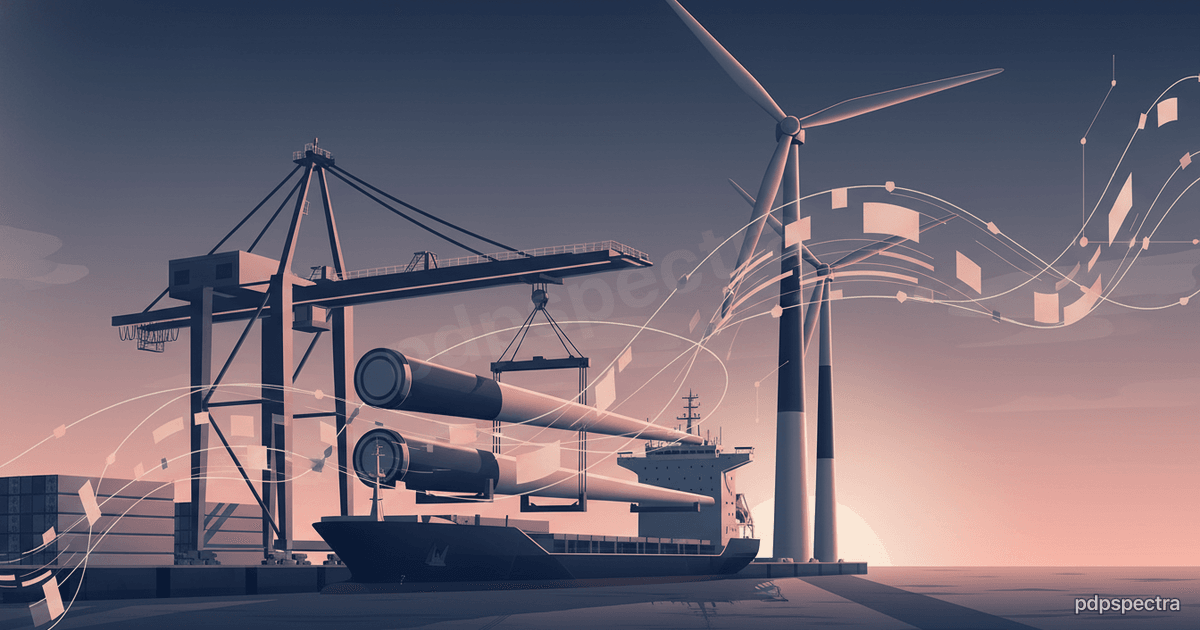
Vestas runs digital twins of essentially every wind turbine model in its fleet and uses AI for turbine design optimisation, predictive maintenance and aftermarket service revenue. Orsted, the offshore wind operator, deploys AI for wind farm operations and grid integration. Topsoe and Haldor Topsoe continue to invest in AI for catalysis and electrolyser design. The GreenLab Skive industrial symbiosis cluster is one of the most concrete examples in Europe of AI-coordinated multi-sector energy and material flows.
Toys and consumer products#
Lego has invested in AI for product design, factory automation and digital experiences for children. The company’s Billund headquarters and the Lego Digital studio in Copenhagen run a sizeable applied ML team. Pandora, the jewellery brand, has rolled out AI for demand forecasting and inventory positioning across its global retail network.
Software products and consumer technology#
Denmark’s product company cluster includes Unity Technologies, Templafy, Trustpilot, Zendesk’s large Copenhagen office, and a wave of B2B SaaS companies anchored by the Danish Maker capital and the Danish Industry Foundation. Generative AI has become the default product surface across most of these companies in 2025 and 2026.
Banking and public sector#
Danske Bank, Nordea Denmark, Nykredit and Jyske Bank have rolled out customer service copilots and credit decisioning models. The Danish Financial Supervisory Authority is aligned with the EU AI Act timeline. The public sector — particularly the Digitaliseringsstyrelsen and SKAT — has been one of the most active European adopters of AI in citizen-facing services.
Job categories growing and shrinking#
The fastest-growing roles in Denmark are clinical AI scientists at Novo Nordisk, Lundbeck and the wider Medicon Valley cluster, supply chain ML engineers at Maersk and DSV, wind energy data engineers at Vestas and Orsted, senior software engineers with generative AI experience in Copenhagen and Aarhus commanding 55,000 to 90,000 Danish kroner per month, and applied scientists at the Pioneer Centre and DTU spin-outs.
The roles under pressure are entry-level customer service positions, junior accountants and finance assistants in industries that have rolled out internal copilots, and template-heavy legal drafting. Danish labour market institutions — the flexicurity model and the strong A-kasse system — are unusually well suited to managing AI-driven transitions and have been actively reskilling workers through 3F, HK and other unions.
Geographic distribution#
Copenhagen concentrates the corporate, pharma and software footprint. The Orestad, Carlsberg Byen and inner-city districts host most growing engineering teams. Aarhus is the second pole, with INCUBA, the Aarhus University Department of Computer Science and a strong consumer tech and IoT cluster. Odense has emerged as a robotics and drone capital thanks to Universal Robots, MiR and the Odense Robotics cluster. Aalborg punches above its weight in wireless and 5G research. Billund is the Lego capital. Esbjerg is the offshore wind operations hub.
Policy and regulatory framework#
The Ministry of Digital Government and the Agency for Digital Government coordinate Danish AI policy. Datatilsynet, the data protection authority, has been pragmatic and has aligned with EU AI Act timelines. The Danish Business Authority runs SMV Digital and the AI partnership programmes that fund applied AI work at smaller firms. The Novo Nordisk Foundation’s commitment to Gefion has produced one of the most consequential public-private compute partnerships in Europe. Digital Hub Denmark coordinates the international promotion of the Danish AI sector.
What is distinctive about Denmark#
Three things make Denmark different. First, the depth of the pharma AI capability is unmatched in Europe outside Switzerland and the UK. Second, the climate technology focus — wind, electrolyser, district heating and biogas — has produced a uniquely Danish AI specialisation around energy systems. Third, the labour market is uniquely well placed to absorb AI-driven change because of flexicurity, strong unions and A-kasse coverage. Restructurings that would create political crises elsewhere are managed through institutional channels in Denmark.
What to watch in the second half of 2026#
A few developments will define the Danish picture into the back half of the year. Novo Nordisk’s GLP-1 manufacturing scale-up through Catalent and the wider Kalundborg expansion depends heavily on AI-driven process control, and the company’s drug discovery roadmap will continue to absorb senior applied ML talent at a pace that materially shapes the Copenhagen labour market. Maersk’s network restructuring will reveal whether the centralised AI scheduling platform can compete with software-native logistics players on a normalised cost basis. Vestas faces continued price pressure from Chinese turbine manufacturers, and the company’s AI work on turbine design optimisation and aftermarket service economics is now a strategic priority rather than a research programme. The Gefion supercomputer is expected to expand its allocation to Danish SMEs and university researchers through 2026. And the EU AI Act enforcement timeline will create the first formal compliance deadlines for Danish high-risk AI systems.
Where pdpspectra fits#
We work with Danish life sciences companies, logistics operators and climate technology firms on the data and platform layer underneath their AI work — building reliable ingestion from manufacturing, shipping or turbine telemetry into cloud warehouses, integrating Snowflake or BigQuery with model serving infrastructure, and standing up the governance work that survives both EU AI Act and sector regulator audits. Our data engineering services are the typical starting point for Copenhagen, Aarhus and Esbjerg clients.
Related reading:
- AI Impact on Sweden Jobs and Industries in 2026
- AI Impact on Norway Jobs and Industries in 2026
- AI Impact on Netherlands Jobs and Industries in 2026
If you are scaling AI across a Danish life sciences, logistics or wind energy organisation and need the platform layer to keep up, reach out and we will share what is working for comparable Copenhagen and Esbjerg engagements.