AI Impact on Norway Jobs and Industries in 2026
How AI is reshaping Norway in 2026 — Equinor, Telenor, Visma, Cognite industrial DataOps, oil and gas digitisation and sovereign wealth fund AI investments.

Norway is one of the most interesting AI economies in Europe precisely because it is unlike the others. The country has 5.6 million people, a sovereign wealth fund that crossed 18 trillion Norwegian kroner in 2025, and the highest GDP per capita in Europe. It is also home to one of the most ambitious industrial AI programmes in the world — Equinor’s commitment to digitising the entire upstream value chain — and a small but globally relevant software products cluster anchored by Visma, Cognite and a long tail of B2B SaaS companies out of Oslo and Trondheim. The Norwegian government’s national AI strategy was refreshed in 2024 with a strong emphasis on sovereign compute capacity, and Sigma2 operates the Olivia supercomputer in partnership with the EuroHPC LUMI consortium. The 2026 story is the convergence of energy transition, sovereign wealth deployment and a maturing software products sector.
Sector-by-sector impact#
Norwegian AI motion is concentrated in five places — upstream oil and gas, telecom, public sector services, the salmon and seafood industry, and a growing software products cluster.
Oil, gas and energy#
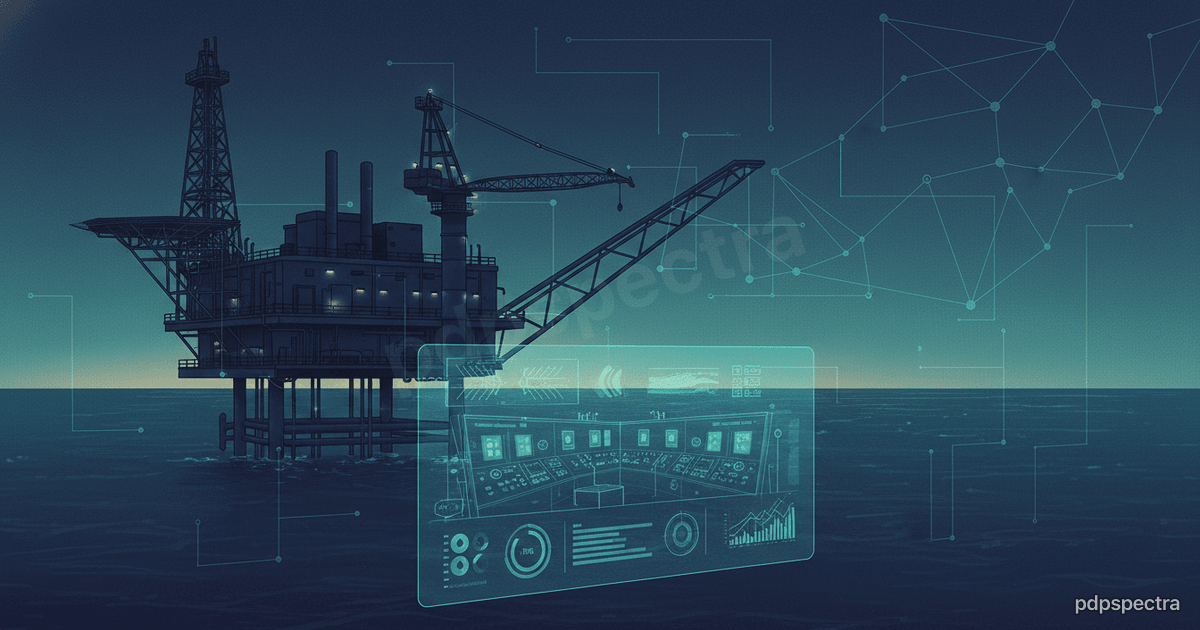
Equinor has been the most public Norwegian AI story for a decade. The company runs digital twins of essentially every producing field on the Norwegian continental shelf, deploys reinforcement learning for production optimisation on assets like Johan Sverdrup and Troll, and uses computer vision against drone footage for routine platform inspection. The shift in 2026 is that AI-enabled remote operations have measurably reduced offshore headcount per production unit, while shore-based control room and data engineering roles have grown. Aker BP, Var Energi and Lundin follow similar patterns at smaller scale. The wider energy transition story — offshore wind in the North Sea, hydrogen pilots and carbon capture at Longship — depends heavily on AI for forecasting, control and asset integrity.
Industrial DataOps and software products#
Cognite, the industrial software company spun out of Aker, has become the reference name for industrial DataOps in heavy industry globally. Its Cognite Data Fusion platform now serves customers from Aramco to ABB, and the Oslo and Lysaker engineering teams continue to expand. Visma is the dominant Nordic business software vendor and has embedded generative AI features across its ERP, payroll and tax filing products. Other notable names include Vipps MobilePay, Schibsted, Kahoot and Confrere.
Telecom and connectivity#
Telenor has rebuilt its operational support stack on cloud and embedded GenAI agents into customer care across its Nordic and Asian operations. Network optimisation and predictive maintenance on the radio access network are the live engineering use cases, and the company’s IoT and connectivity business now sells AI-enabled fleet and asset monitoring as a managed service.
Seafood and aquaculture#
The salmon farming industry is one of Norway’s most distinctive AI users. Mowi, SalMar, Leroy Seafood and Cermaq deploy computer vision against underwater cameras for sea lice detection, biomass estimation and feed optimisation. The shift toward closed and semi-closed containment systems has accelerated investment in autonomous control.
Public sector and healthcare#
Helse Vest, Helse Sor-Ost and the Norwegian Directorate of Health have piloted clinical decision support systems and AI-driven radiology triage. Skatteetaten, the tax authority, runs document understanding and risk scoring on returns. Public sector AI in Norway tends to be cautious, well-funded and well-governed, which is a useful counterweight to the speed of the private sector.
Job categories growing and shrinking#
The fastest-growing roles in Norway are subsurface and reservoir engineers with Python and ML skills, industrial DataOps engineers tied to the Cognite and Aker ecosystems, MLOps engineers, software engineers with generative AI experience in Oslo and Trondheim commanding 900,000 to 1.4 million Norwegian kroner per year, and clinical AI specialists at the regional health trusts.
The roles under pressure are offshore production operators in repetitive monitoring roles, junior accountants and finance assistants in industries that have rolled out Visma copilots, and back office banking and insurance work. Norway’s strong vocational system and active labour market policies have been faster than most European peers in funding reskilling for affected workers.
Geographic distribution#
Oslo concentrates the corporate and product company headcount — Skoyen, Lysaker and the Oslo Science Park host most digital teams. Stavanger remains the operational capital of Norwegian oil and gas and is increasingly an industrial AI hub thanks to Equinor, Aker BP and the wider supplier ecosystem. Trondheim hosts NTNU, SINTEF and a strong cluster of software product companies. Bergen has a growing maritime, seafood and renewables AI cluster. Tromso is emerging as a sovereign compute location thanks to cold climate and clean energy.
Policy and regulatory framework#
The Ministry of Digitalisation and Public Governance coordinates the national AI strategy. Datatilsynet, the data protection authority, has run a regulatory sandbox for AI since 2020 that has materially helped product companies launch responsibly. The Petroleum Safety Authority and the Norwegian Communications Authority have published sector-specific guidance. Norway is not an EU member but follows EU AI Act provisions through the EEA agreement, which means Norwegian companies prepare to the same standard as their EU peers. Sigma2 and Sikt run the public research compute infrastructure.
What is distinctive about Norway#
Three things make Norway different. First, the depth of the industrial AI use case. Equinor and the wider energy sector run more sophisticated production-grade AI than most national economies. Second, sovereign wealth. The Government Pension Fund Global owns roughly 1.5 percent of every publicly listed company on earth, which makes Norway an unusually engaged investor in global AI infrastructure and an unusually careful regulator of its domestic AI sector. Third, the salmon farming industry has produced a uniquely Norwegian AI niche around underwater computer vision and fish biology that has no real equivalent elsewhere.
What to watch in the second half of 2026#
A few developments will define the Norwegian picture into the back half of the year. Equinor’s progress on Hywind Tampen and the wider Northern Lights carbon capture programme depends on AI-driven optimisation of offshore operations and CO2 injection control — and either programme slipping would reshape the Norwegian energy AI agenda. Cognite’s product roadmap is shifting toward agent-based industrial automation rather than classical industrial DataOps, which will create new senior product engineering roles in Oslo and Lysaker. The Norwegian government’s expanded sovereign cloud commitments through Sky Norge are expected to clarify which workloads can be processed inside Norwegian borders, which will reshape the calculus for public sector and oil and gas AI deployments. And the Government Pension Fund Global’s revised approach to AI portfolio companies is being closely watched as a signal of how a major sovereign investor manages the technology.
Where pdpspectra fits#
We work with Norwegian energy operators, software product companies and public sector teams on the data and platform layer underneath their AI work — building reliable ingestion from upstream control systems, integrating Cognite-style industrial data platforms with cloud warehouses, and standing up the governance work that makes EU AI Act and sector regulator audits survivable. Our AI and LLM integration services are the typical starting point for Oslo, Stavanger and Trondheim clients moving from pilots to production.
Related reading:
- AI Impact on Sweden Jobs and Industries in 2026
- AI Impact on Denmark Jobs and Industries in 2026
- AI Impact on Netherlands Jobs and Industries in 2026
If you are scaling industrial AI across Norwegian operations and need the platform layer to keep up, get in touch and we will share what is working for comparable energy and software clients.